














Exness Prohibited Actions (Reasons for Account Closure)
Transaction
Exness Prohibited Activities
Exness is characterized by having fewer prohibited activities compared to other brokers. With fewer restrictions, your trading is not limited, allowing you to enjoy trading using a wide range of trading strategies.On the other hand, if you engage in trading activities prohibited by Exness, you may face penalties such as account suspension or withdrawal denial, which could prevent you from trading with your Exness account. Please also note that even if you do not violate any prohibited activities, leaving your account inactive for a certain period will result in it being classified as a dormant account, temporarily preventing you from trading.
What Are Exness's Prohibited Activities?
Exness allows trading through various methods, but some types of trading are prohibited. If you intentionally engage in trading activities that Exness has designated as prohibited, you may face penalties such as account closure (account suspension) or withdrawal denial.Exness has established the following four types of trading as prohibited activities. Please be aware of these restrictions before trading with Exness.
Use of the Account by a Third Party
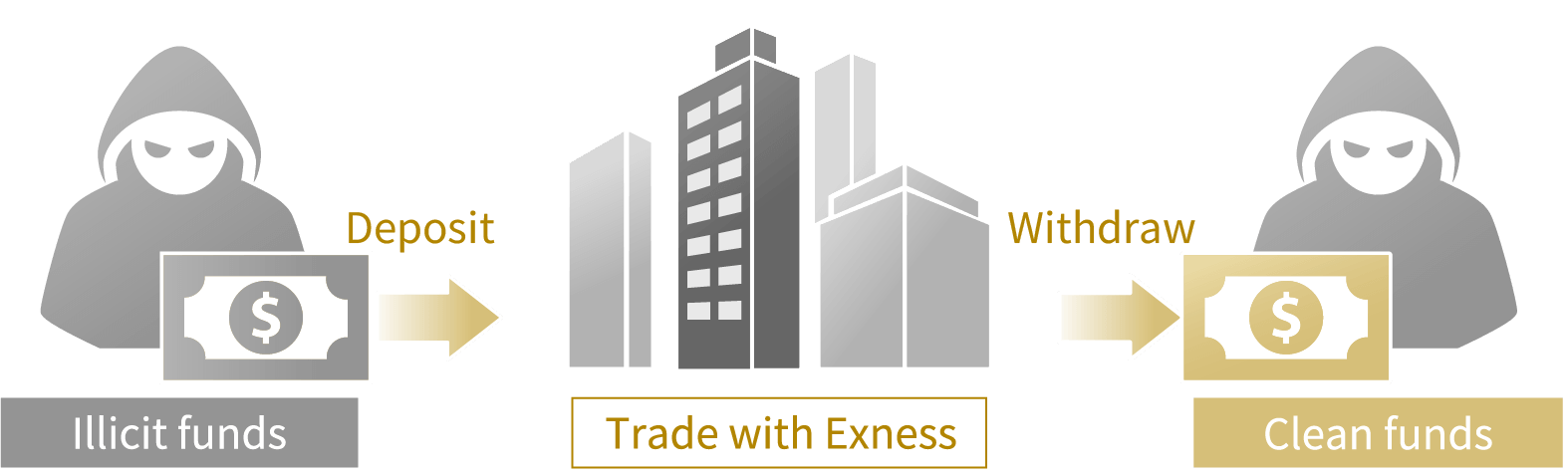
Exness prohibits the use of accounts by third parties. The main reason Exness prohibits the use of accounts by third parties is to prevent the purchase or management of accounts in someone else’s name, as well as to prevent their use for money laundering.For example, if you deposit money obtained through criminal activity into an Exness account, conduct a few trades, and then withdraw the funds, you would be engaging in money laundering. Money laundering is prohibited not only in Japan but worldwide, and Exness is no exception.
Exness accounts may only be used and traded by the individual who opened the Personal Area. Even if the person is a family member, using an account other than your own is prohibited; therefore, please be careful not to unintentionally disclose your account information to third parties or use someone else’s account.

Money laundering is the act of concealing the source of funds obtained through criminal activity. Common methods include repeatedly transferring funds back and forth between financial institution accounts held under fictitious names or in the names of others, as well as purchasing stocks and bonds.
Transactions Through Self-Affiliate Programs
Exness prohibits trading through self-affiliate activities that abuse the “Partnership Program.” Self-affiliate trading refers to the practice of opening an account via an affiliate link you have generated yourself, trading through that account, and improperly obtaining commissions.The Partnership Program is intended to encourage you to refer third parties to Exness; partners are only eligible for compensation when a referred individual opens an account and trades.
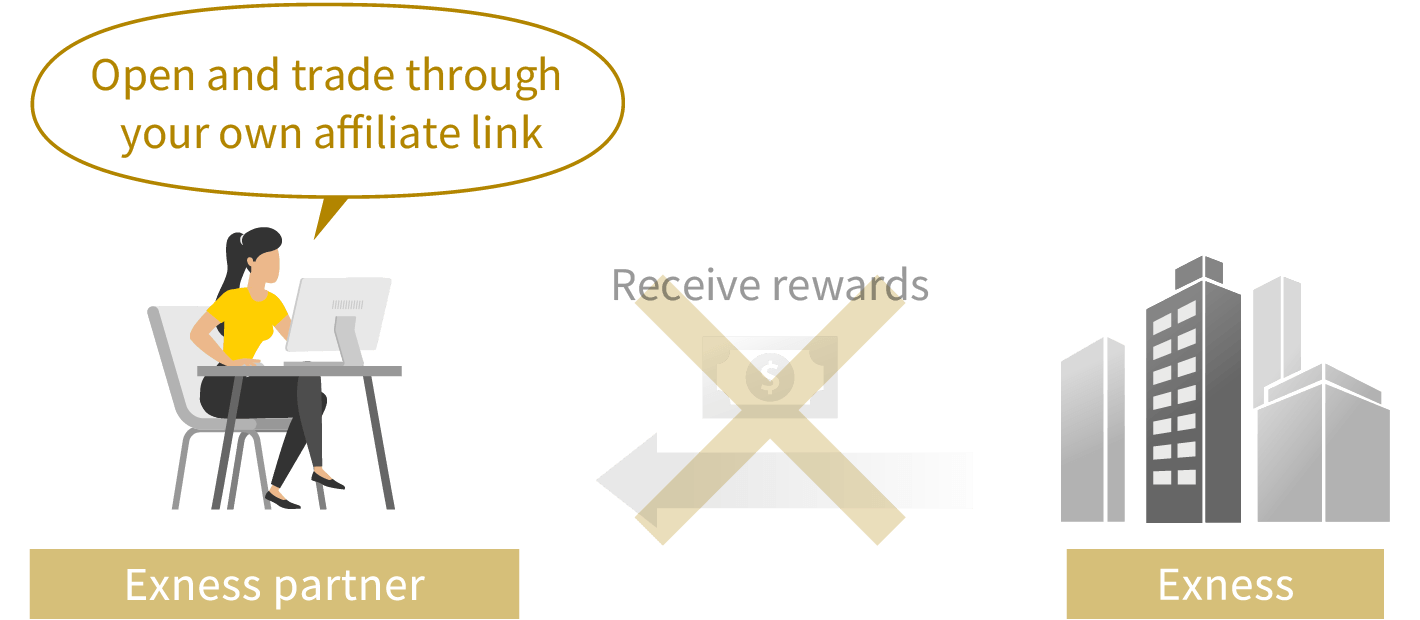
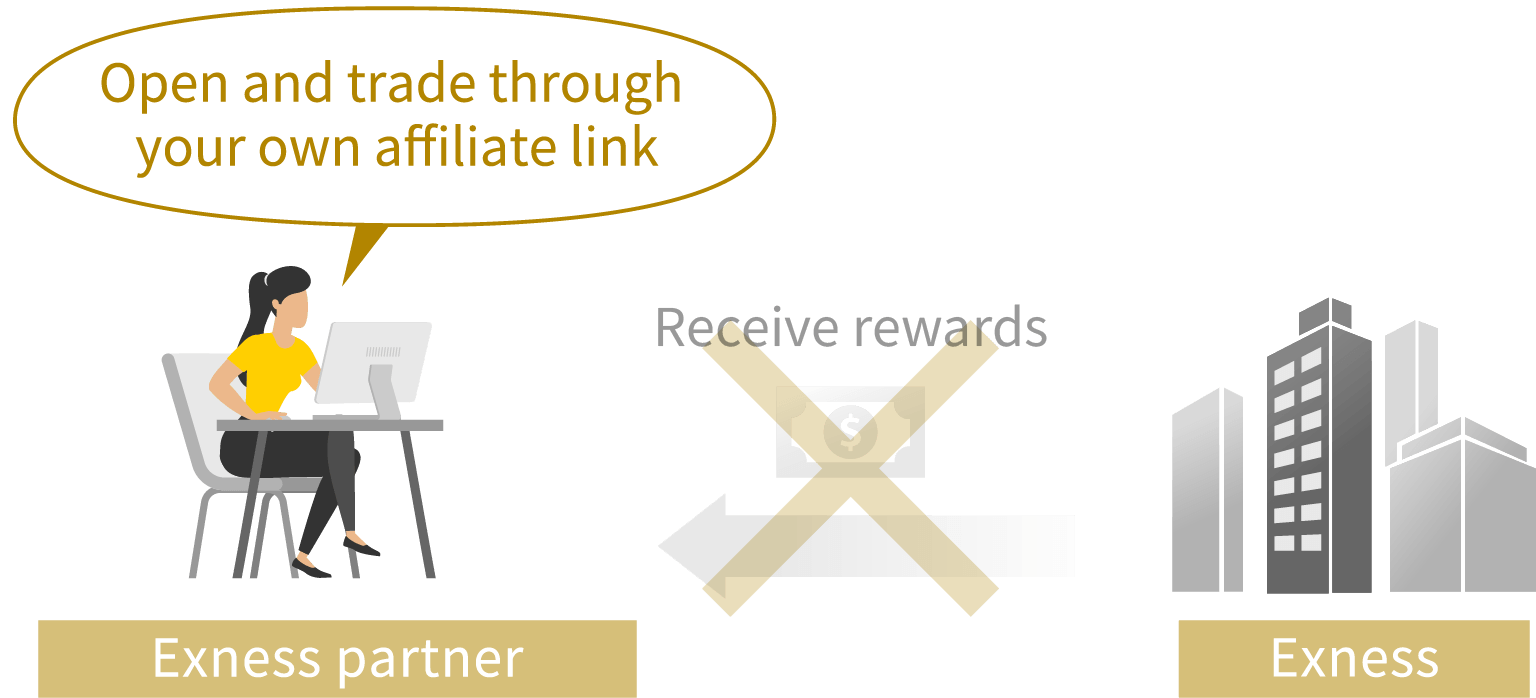
The specific process for self-affiliate marketing that exploits Exness's partnership program is as follows:
Specific Examples of Abuse of the Exness Partnership Program
If you trade using the method described above, you can earn rewards from Exness through its partnership program in addition to your trading profits. While some FX brokers allow account openings through self-affiliate programs, this is a prohibited practice at Exness, so please exercise caution when using affiliate links.While some FX brokers permit self-affiliate account openings, this constitutes a violation of Exness’s terms of service. Even if you unintentionally engage in self-affiliate activity without realizing it is prohibited, you may be subject to penalties such as account deletion or withdrawal denial; therefore, please exercise caution when using affiliate links.

Trading that exploits server outages or rate delays
Exness prohibits trading that intentionally exploits server outages or price delays. Such trading is prohibited not only by Exness but by virtually all overseas FX brokers.Server outages and quote delays often occur when there is a flood of trader orders, causing discrepancies between the latest price and the displayed price. Therefore, during times when the market is prone to sharp, sudden fluctuations—such as during economic indicator releases or statements by key figures—trading specifically to exploit these discrepancies offers a high probability of profit.
Exness does not prohibit trading around the release of economic indicators or statements by key figures.However, trading that intentionally targets specific timing will be deemed a violation of our prohibited activities and, in the worst case, may result in penalties such as account closure or withdrawal denial. Please exercise caution when trading during periods of high price volatility, as server outages and rate delays are more likely to occur during such times.
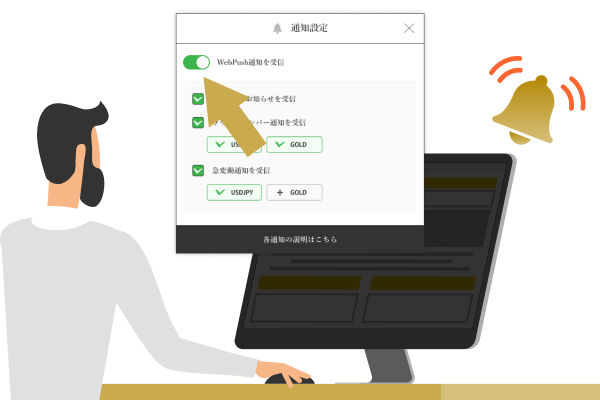
With the Exness trading app, you can quickly check key economic indicators and the latest news in the app’s “Economic Calendar.” Since you can view the latest market information in real time even when you’re on the go, you can adjust your trading strategy accordingly.
Trades Not Prohibited by Exness
At Exness, to provide our clients with a more comfortable trading environment, we allow trading activities that other FX brokers prohibit, without any restrictions. With fewer prohibited trades, our clients have a wider range of trading options and can trade with greater flexibility. The following are the types of trades that do not fall under Exness’s prohibited activities.
Scalping Trading
Exness does not prohibit scalping.Scalping is a trading strategy that involves repeatedly buying and selling within a short period to accumulate small profits. By taking advantage of Exness’s key features—including leverage of up to 2,000x (*) and some of the narrowest spreads in the industry—you can generate significant profits even from just a few pips.In particular, the Professional account type is ideal for scalping, as it allows you to trade with ultra-tight spreads and up to 2,000x leverage.
Many brokers prohibit scalping or impose strict rules to avoid risks such as server downtime and quote delays caused by scalping trades. However, Exness operates servers in five locations around the world and distributes connections across them, which helps reduce the load caused by a high volume of orders.In addition, the “Trading Environment Improvement Project” was launched in 2021, allowing you to enjoy scalping in a more stable trading environment.
(*) Leveraged trading involves high risk, and you may lose all of your invested capital. Please ensure you fully understand the risks before trading.
Exness offers three types of professional accounts: “Low Spread Accounts,” “Zero Accounts,” and “Pro Accounts.” Designed for experienced intermediate and advanced traders, these three account types differ in terms of spreads and trading commissions.While the Low Spread and Zero accounts incur transaction fees, they allow you to trade with extremely tight spreads starting at 0.0 pips. With the Pro account, you can trade at low cost with no fees and tight spreads.
Hedging Transactions Within the Same Account or Across Multiple Accounts
Exness does not prohibit hedging trades between the same account or across multiple accounts.Hedging is a trading strategy in which you simultaneously hold both a long position and a short position of the same size in the same currency pair. By hedging, you can limit the increase or decrease in the profit or loss on your open positions, allowing you to hedge against the risk of sudden price fluctuations while still aiming for significant profits.Some other brokers prohibit hedging altogether—or specifically prohibit hedging across multiple accounts—to prevent fraudulent trading or a deterioration in market liquidity.
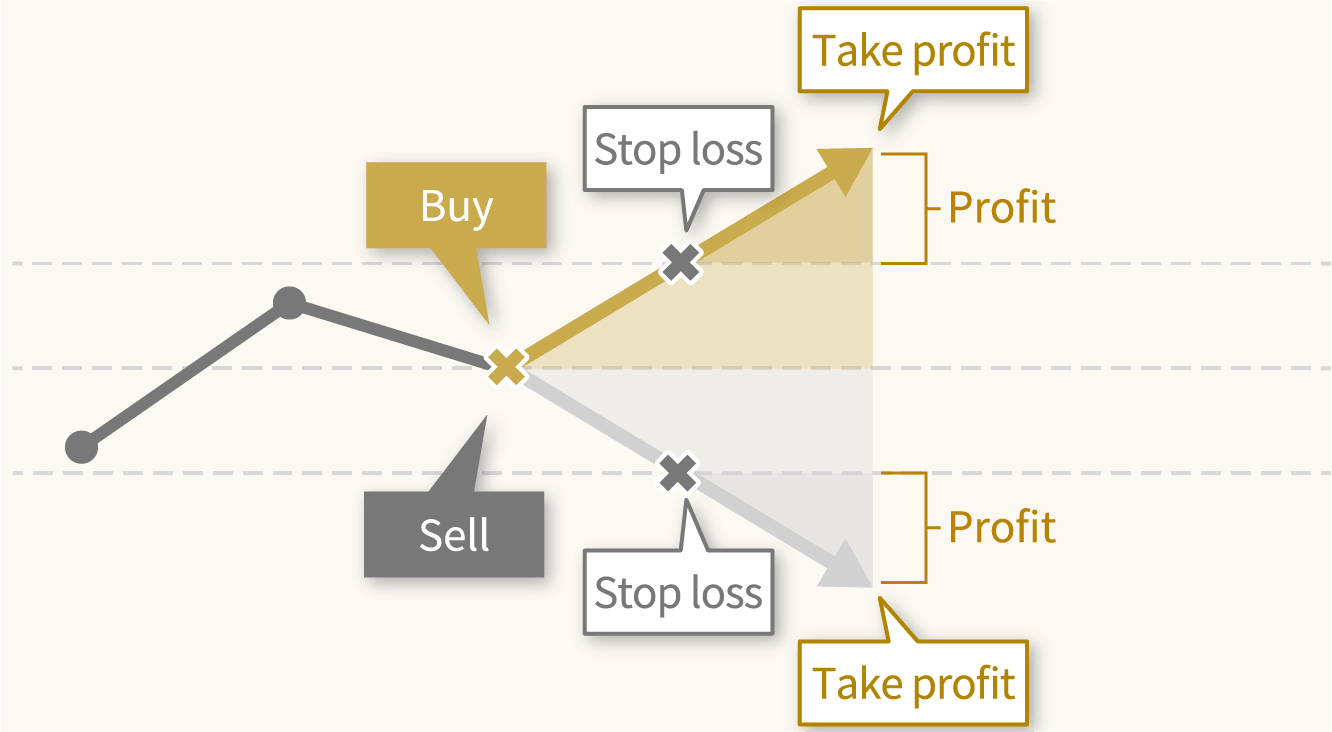
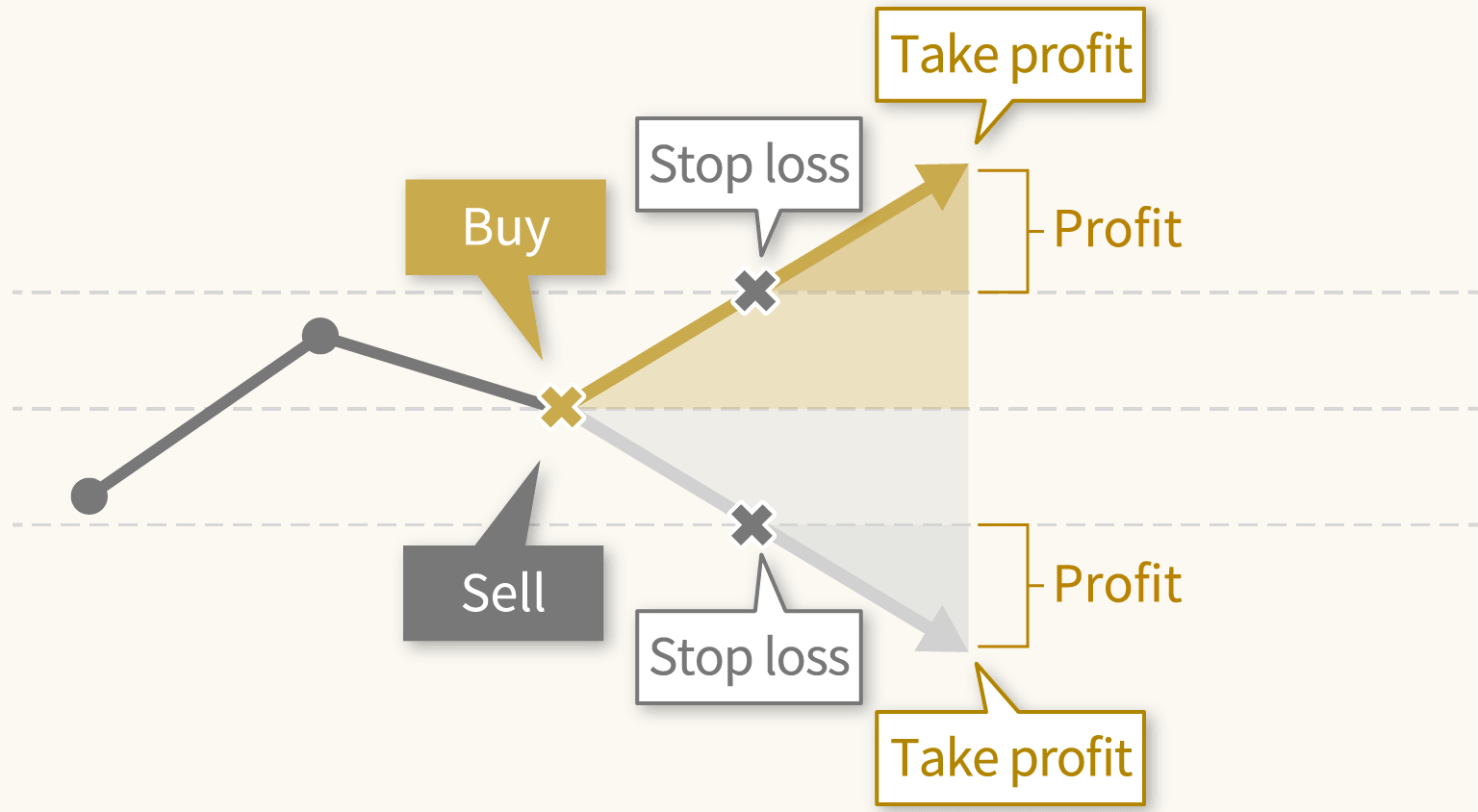
When engaging in hedging trades, it is important to note that trading costs—such as spreads and transaction fees—are doubled because you are opening both long and short positions.However, while Exness’s Low Spread and Zero accounts do incur trading commissions, they offer industry-leading tight spreads starting at 0 pips, allowing you to keep total trading costs low while engaging in hedging trades.Other account types also offer commission-free trading and low spreads, allowing you to enjoy hedging while aiming for significant profits through high-leverage trading while minimizing losses.
Trades Timed for Market Open
Exness does not prohibit trades that intentionally target price gaps or gap fills. A gap refers to a significant gap between candlesticks caused by a price divergence.Gaps primarily occur when the market is closed over the weekend; the space that forms between the weekend’s candlesticks and the ones at the start of the week is called a “gap up.” Generally, when a gap forms, the market tends to move in a way that “fills the gap.”
Since gap-filling trades make price movements easier to predict, trading with high leverage offers a high probability of making a profit. However, because the zero-cut system requires FX brokers to cover losses if a trade fails, many brokers prohibit intentional gap-filling trades.
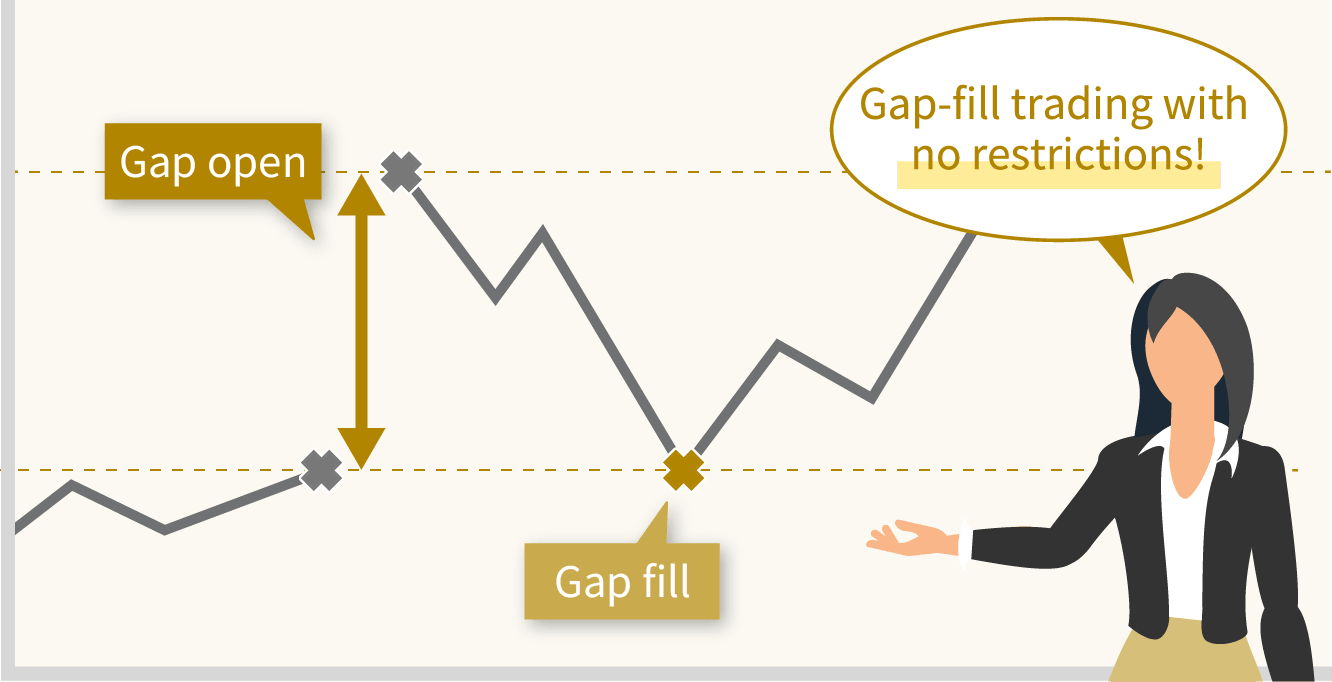
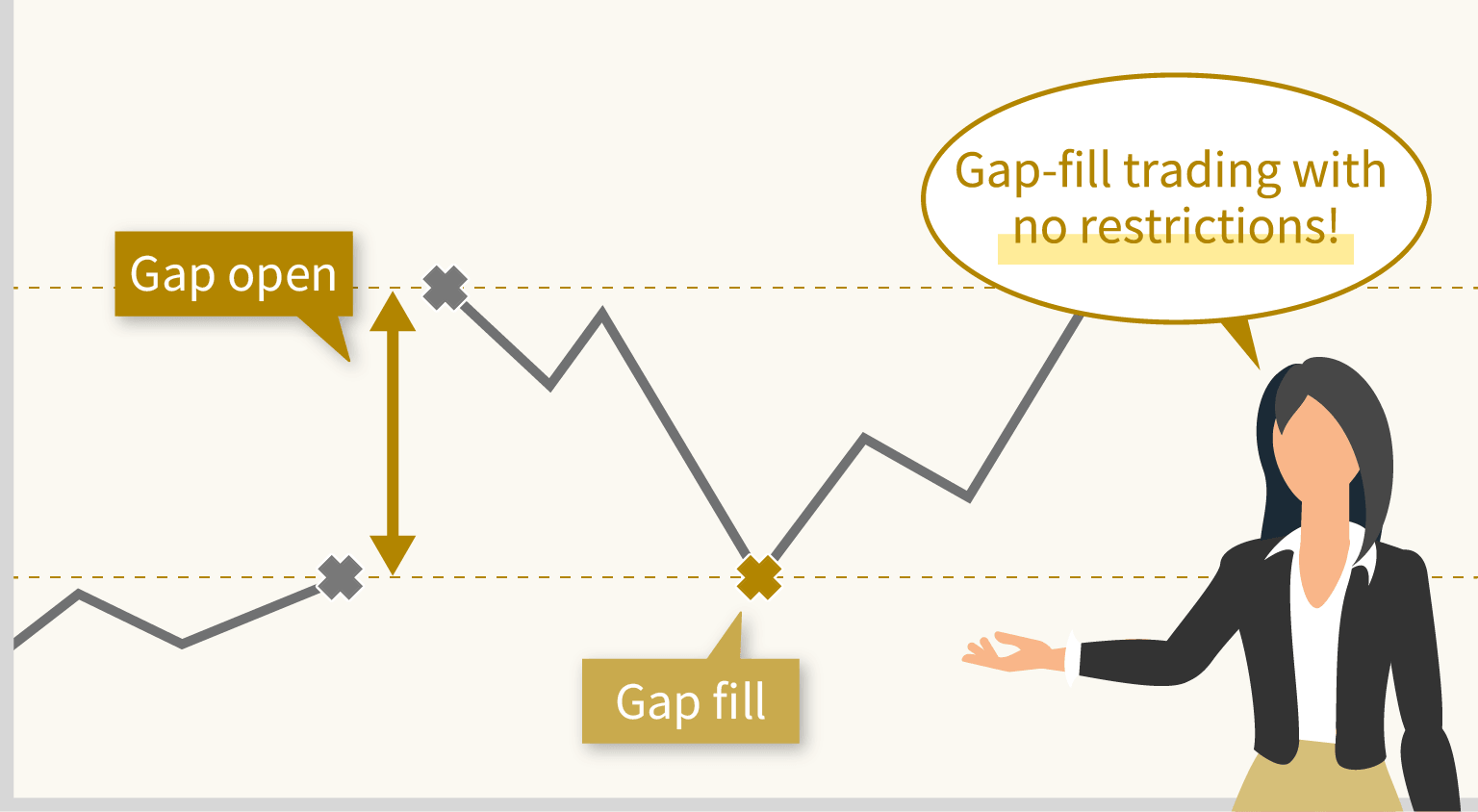
On the other hand, Exness does not impose any restrictions on gap-filling trades, and even if you execute gap-filling trades consecutively, there are no penalties such as account closure or withdrawal denials. By taking advantage of Exness’s leverage of up to 2,000x (*), you can aim for substantial profits in a short period of time.
(*) Leveraged trading involves high risk, and you may lose all of your invested capital. Please ensure you fully understand the risks before trading.
Arbitrage
Exness does not prohibit arbitrage trading. Arbitrage refers to buying the undervalued instrument and selling the overvalued instrument among two instruments (currency pairs), and is a trading method that theoretically guarantees a profit. Arbitrage trading can be broadly categorized into the following three methods:
Three Arbitrage Strategies and Their Characteristics at Exness
| Arbitrage Trading Strategies | Features |
| Inter-broker Arbitrage |
|
| Swap Arbitrage |
|
| 3-Currency Arbitrage |
|
| Inter-broker Arbitrage |
|
| Swap Arbitrage |
|
| 3-Currency Arbitrage |
|
Since many FX brokers prohibit trades that guarantee a profit, arbitrage trading is considered a prohibited activity. Additionally, some brokers prohibit only certain types of arbitrage trading out of the three. Exness allows all three types of arbitrage trading, so you can enjoy trading with a greater focus on maximizing your profits.
Some arbitrage strategies involve trading across multiple FX brokers, but many brokers other than Exness prohibit arbitrage trading. If you plan to engage in arbitrage trading across multiple brokers using Exness, please select an account with a broker that does not prohibit arbitrage trading.
Automated Trading Using an EA
Exness does not prohibit trading using EAs (Expert Advisors). An EA is a system that monitors charts 24 hours a day and automatically executes trades based on built-in logic.
Since many domestic FX brokers use the “Dealing Desk (DD)” model, traders’ losses translate into profits for the brokers. Trading with EAs tends to generate profits for clients, but this results in losses for brokers that use the DD model; therefore, most domestic FX brokers do not offer EA services.
On the other hand, Exness uses the “NDD model” for order execution and generates revenue from spreads and trading commissions. Since Exness has no conflict of interest with its clients, it does not impose any restrictions on EA services that are likely to benefit clients.Regarding spreads—a common drawback of the NDD model—Exness offers some of the tightest spreads in the industry. By utilizing EAs, even beginners in forex trading or those who don’t have time to dedicate to trading can easily enjoy trading.
Exness allows for a wide range of trading methods, so you can enjoy trading using various strategies. However, please be aware that if you engage in trading activities that Exness has designated as prohibited, you may face penalties such as account suspension or withdrawal denial.
Penalties for Violating Exness's Prohibited Activities
Exness allows for a wide range of trading methods, so you can enjoy trading using various strategies. However, please be aware that if you engage in trading activities that Exness has designated as prohibited, you may face penalties such as account suspension or withdrawal denial.
Account Deletion (Account Freeze)
At Exness, if any actions that violate the prohibited activities are discovered, your account may be deleted (frozen). Once an account is deleted by Exness, you will not only be unable to make withdrawals from the deleted account, but you will also be unable to open a new account.
At Exness, if there is no trading or deposit activity for a certain period, your account will automatically become dormant (archived). If you wish to restore an archived account, you can reactivate it through your Personal Area. However, please note that if your account is frozen as a penalty for violating our Terms of Service, the account itself will be deleted and cannot be restored.
Canceling a Zero Cut
Exness employs a zero-cut system, which means that even if losses exceed your account balance, Exness will cover the negative balance. However, if any prohibited activities are discovered, your account will be excluded from the zero-cut system.Please also note that if a prohibited act is discovered after a negative balance has been covered, the Zero Cut will be revoked, and you will be required to make an additional deposit to cover the margin call.
Refusal to Withdraw Profits
At Exness, if profits are determined to have been obtained fraudulently through trades that violate our prohibited activities, we may refuse to process the withdrawal of those profits. To avoid having your profits confiscated due to a withdrawal refusal, please carefully review our prohibited activities before you begin trading and enjoy trading with Exness.
About Exness Dormant Accounts
At Exness, if any prohibited activities are detected, your account will be deleted (frozen), and you will no longer be able to trade.Additionally, if no account activity is detected for a certain period after opening an account with Exness, the account will automatically become dormant (archived), and trading will no longer be possible. However, unlike account closure resulting from a penalty, if your account becomes dormant due to inactivity, you can reactivate it and resume trading by completing a simple procedure.
Conditions for an Account to Become Inactive at Exness
At Exness, if there is no trading or deposit activity for a certain period after opening an account, the account will automatically become a dormant account (archived account). The conditions for an account to become dormant vary depending on the trading platform (MT4/MT5) used for the account, as follows:
Conditions for an Account to Become Dormant at Exness
| Trading Platform | Dormancy Conditions |
| MT4 (MetaTrader 4) | No activity for 90 days and an account balance of less than $10 |
| MT5 (MetaTrader 5) | No activity for 15 days and an account balance of less than $1 |
| MT4 (MetaTrader 4) |
| No activity for 90 days and an account balance of less than $10 |
| MT5 (MetaTrader 5) |
| No activity for 15 days and an account balance of less than $1 |
Procedure for Reactivating a Dormant Account with Exness
At Exness, accounts that have been inactive for a certain period of time are designated as dormant accounts (archived accounts) to reduce server load. Dormant accounts can be reactivated through a simple process in the Exness Personal Area. The steps to reactivate a dormant account are as follows:
Log in to the Exness Personal Area, go to "My Account" in the menu, and select "View Account" under "Archived Accounts."
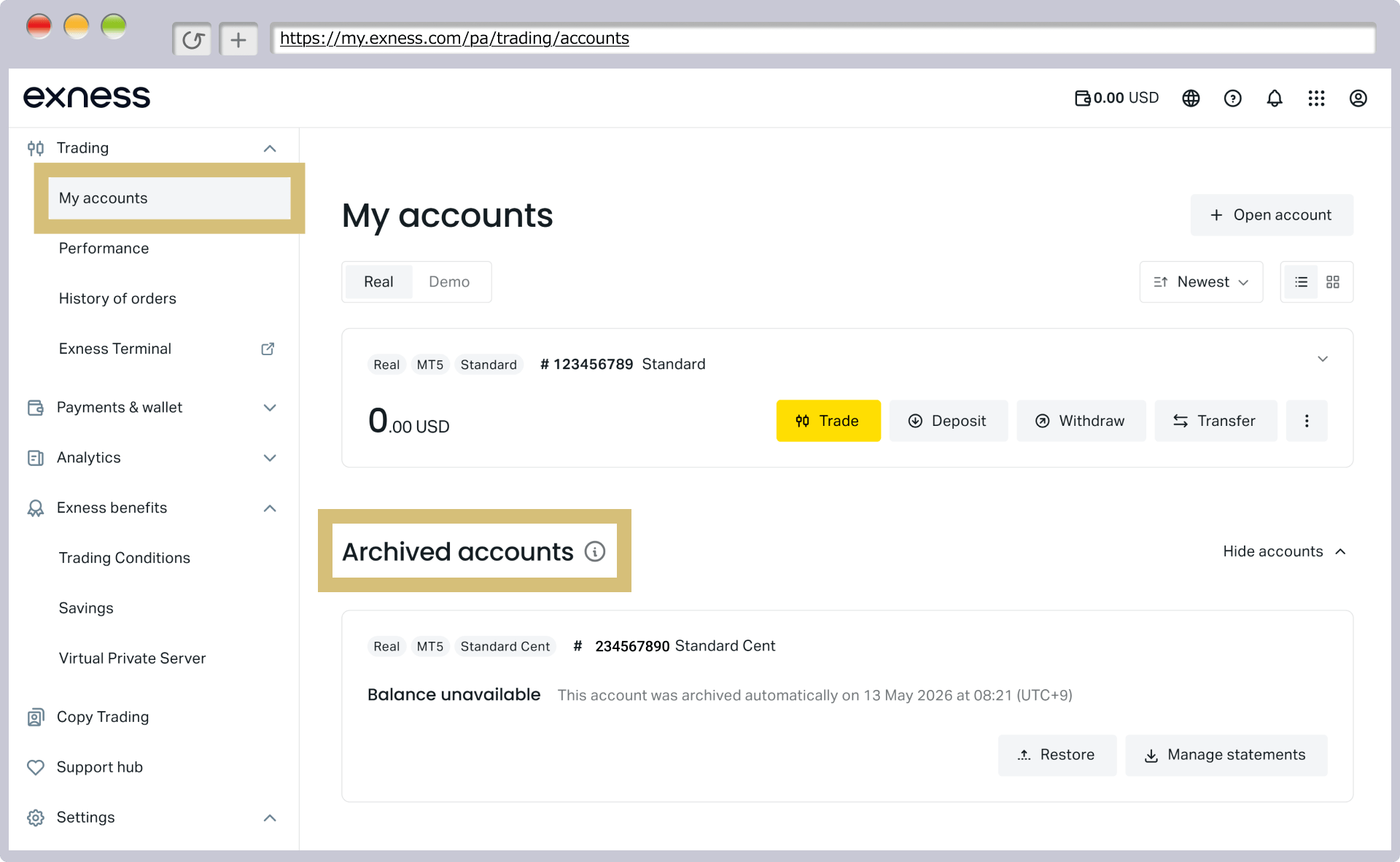
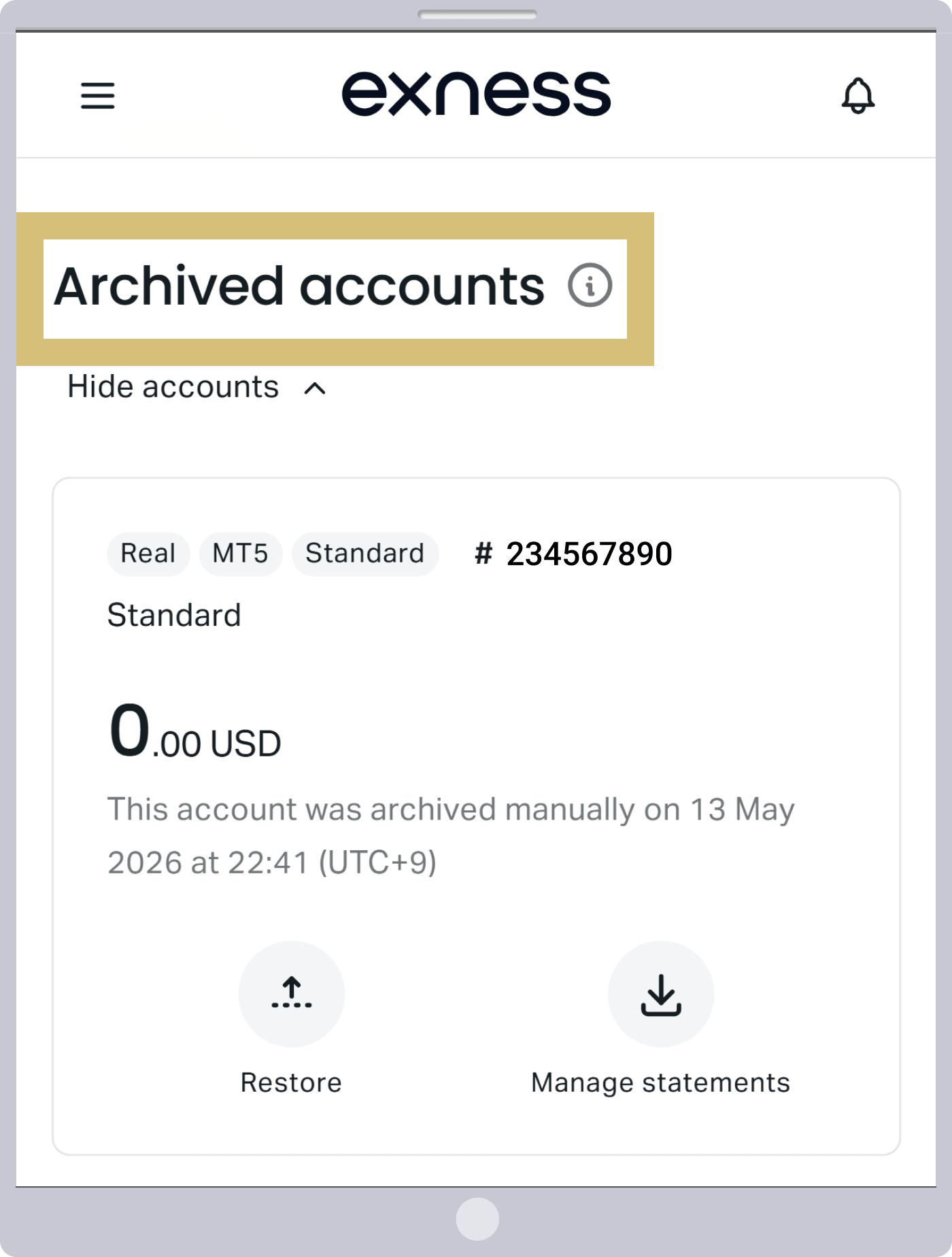
Click "Reactivate" for the trading account you want to restore.
Tap "Reactivate" for the trading account you want to restore.
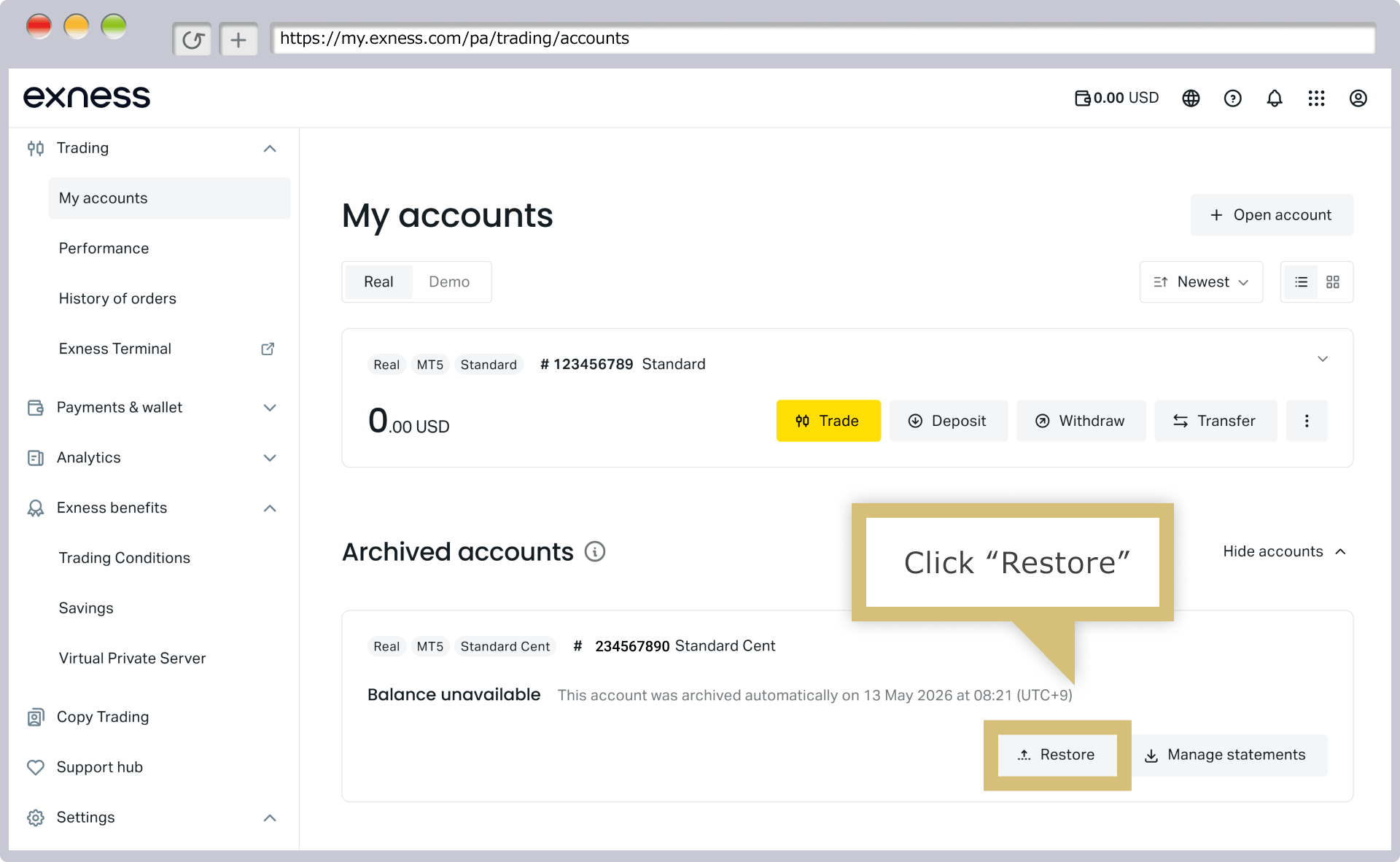
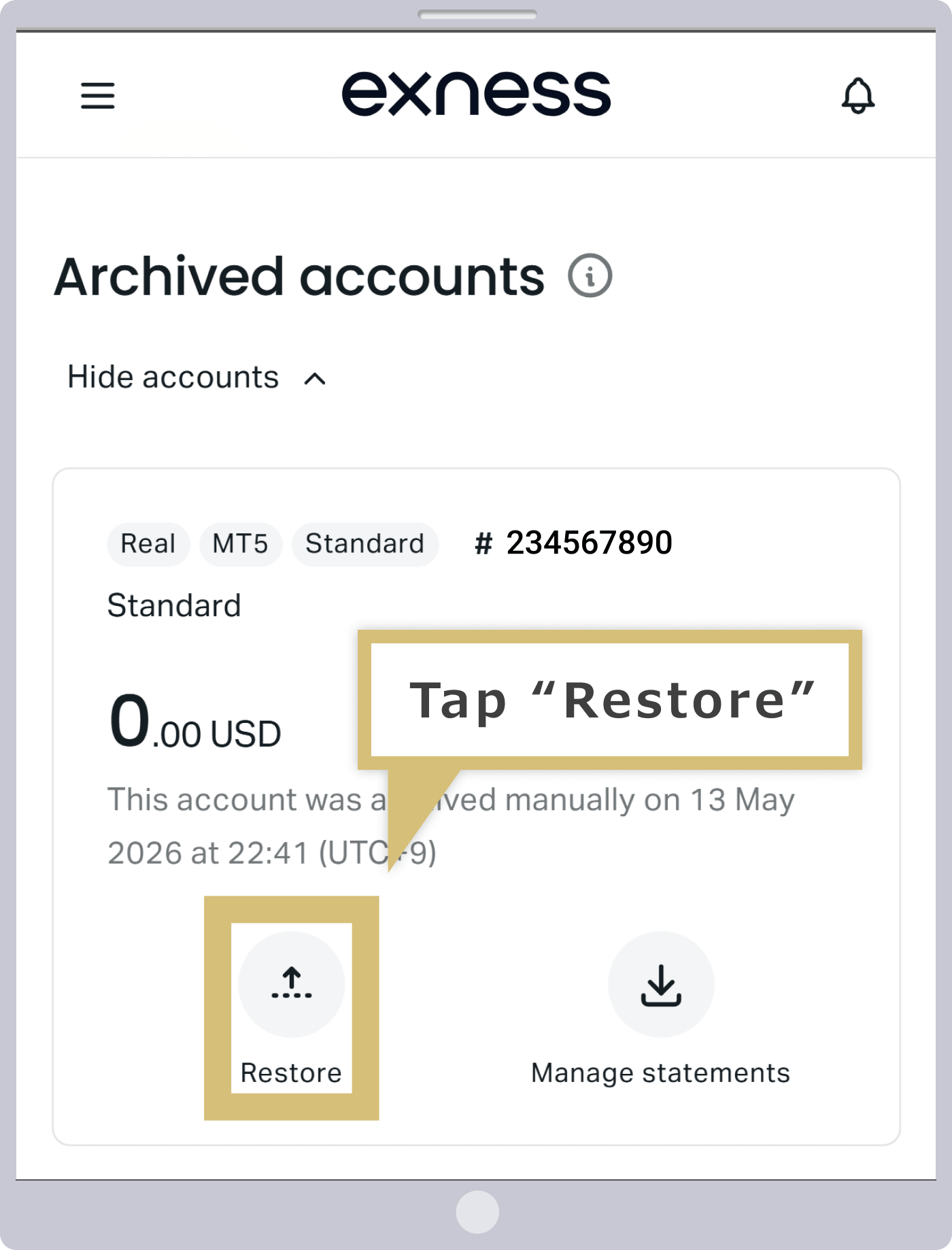
Please check the "Trading Accounts" tab to view your reactivated account.
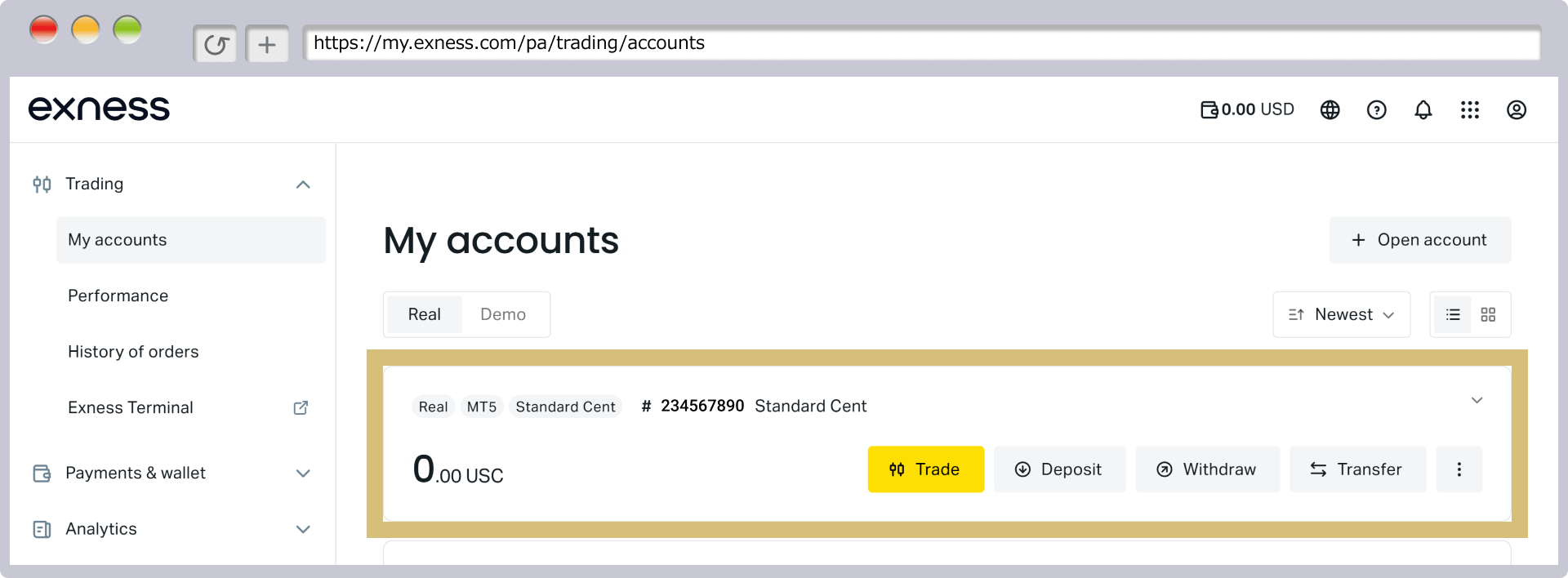
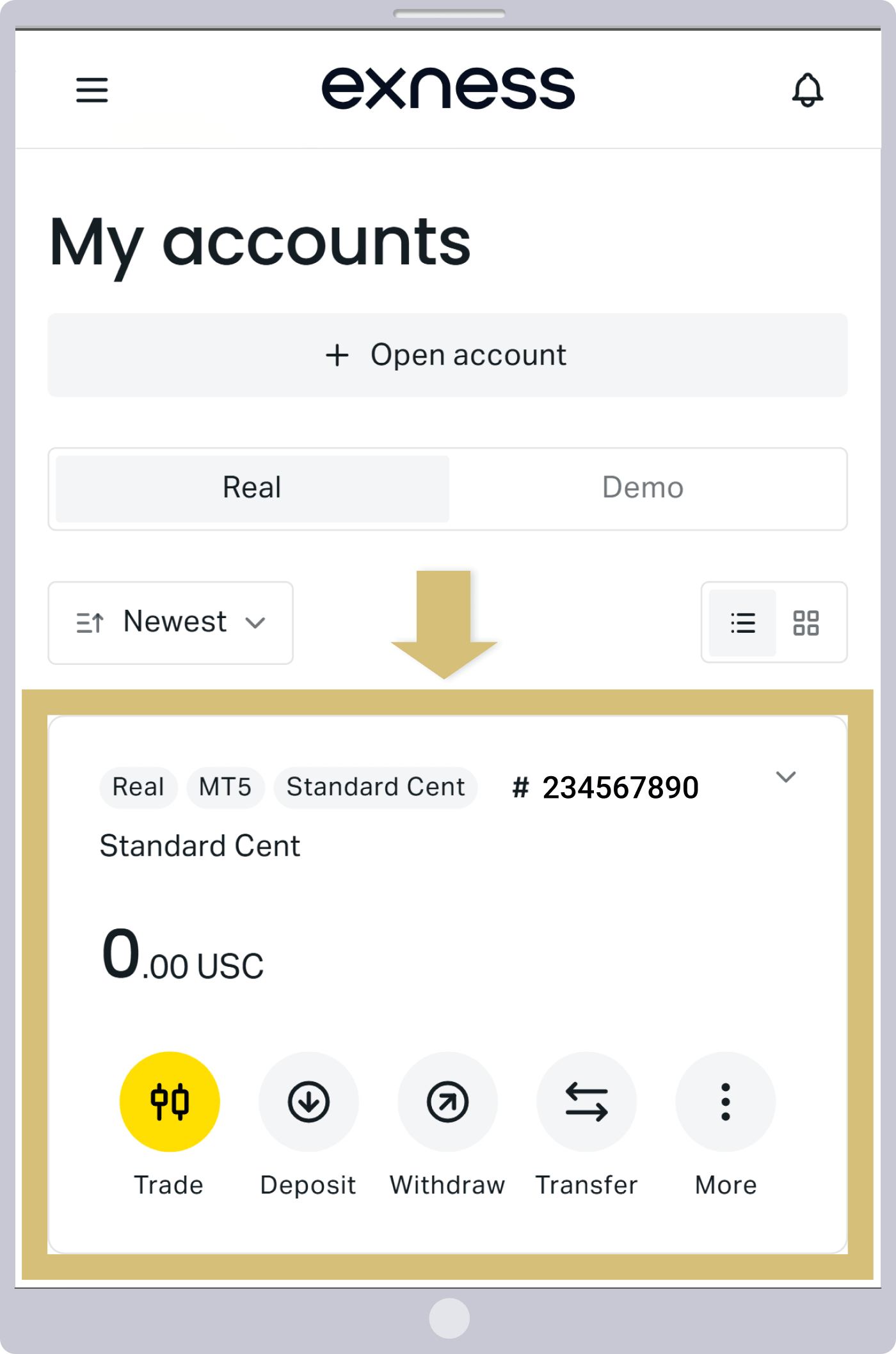
At Exness, you can open up to 200 accounts, but you can archive any accounts you no longer need on your own. If you do not plan to use all of your accounts, you can delete your account and cancel your registration; however, if you do so, you will not be able to re-register using the same email address.Additionally, you will no longer be able to view your past trading history or any other records. Therefore, if you plan to temporarily stop trading, we recommend keeping your account active and simply archiving the accounts you no longer need. When you’re ready to resume trading, you can reactivate your account by completing the reactivation process and resume using your Exness account.
Frequently Asked Questions (FAQ) Regarding Exness's Prohibited Activities
-
Does Exness allow hedging between multiple accounts within the same account?
Yes, at Exness, you can hold hedged positions across multiple accounts within the same account. If you are running automated trading using EAs or conducting discretionary trading on multiple accounts simultaneously, you may unintentionally end up with hedged positions across those accounts. Since hedging across multiple accounts is not prohibited at Exness, you can trade with confidence.
Read More
11.01.2024
-
Can I reactivate an account that has been suspended at Exness?
No, Exness cannot reactivate accounts that have been suspended due to violations of our policies or other reasons. Please note that at Exness, trading accounts with no trading activity or deposits for a certain period of time are automatically designated as dormant (archived) accounts. If you wish to use your account again, you can reactivate it through your Personal Area.
Read More
11.01.2024
-
Is it possible to participate in a self-affiliate program with Exness?
No, Exness prohibits trading through self-affiliate programs that abuse the “Partnership Program.” The platform is equipped with a feature that automatically detects users who open accounts or trade through their own partner links, and immediate action is taken if self-affiliate activity is detected.
Read More
11.01.2024
-
Is it possible to trade on Exness when the server is down?
No, Exness prohibits trading that intentionally targets specific moments of server downtime or rate delays. Such trades are considered “trades in violation of the terms of service” and are subject to penalties. Since rate delays are more likely to occur during periods of high market volatility, please trade with caution.
Read More
11.01.2024
-
Is arbitrage prohibited at Exness?
No, at Exness, arbitrage is not prohibited, and we permit all three types of arbitrage. While you are welcome to try various strategies, please be aware that many brokers other than Exness prohibit cross-broker arbitrage, so please take care not to violate their policies when trading.
Read More
11.01.2024