














Exness Scalping Trading
Transaction
Exness Scalping Trading
At Exness, you can enjoy scalping in the best possible trading environment. To maximize your performance using the scalping strategy—which involves repeatedly buying and selling over short time frames ranging from a few seconds to a few minutes to accumulate small profits—it is essential to trade under conditions that are well-suited for scalping.Exness offers five account types with different features, allowing you to engage in scalping with the account that best suits your trading style.In particular, the Professional-type Low Spread account, Zero account, and Pro account—all characterized by low spreads—offer trading conditions ideal for scalping, featuring “low spreads starting at 0 pips × high leverage of up to 2,000× × no restrictions on trading strategies” (*).
(*) Leveraged trading involves high risk, and you may lose all of your invested capital. Please ensure you fully understand the risks before trading.
Exness Allows Scalping
Exness allows scalping, so you can enjoy scalping with confidence.While many other brokers impose detailed rules—such as prohibiting scalping or requiring a minimum position holding time—Exness places no restrictions on scalping. Whether you trade manually or use an EA (automated trading system), you can engage in scalping in a way that suits your trading style.
Exness offers trading conditions that are favorable for scalping
Exness offers trading conditions that are favorable for scalping. Scalping is a trading strategy in which trades are completed within a short timeframe—ranging from a few seconds to a few minutes—to accumulate small profits. Although the profit from a single trade is small, losses can be kept to a minimum because positions are held for only a short time.
To achieve maximum performance in scalping—also known as ultra-short-term trading—it is essential to have a trading environment suited to scalping. At Exness, we offer high leverage of up to 2,000x(*) while keeping trading costs, such as spreads and commissions, to a minimum, allowing you to engage in highly capital-efficient scalping trades.
(*) Leveraged trading involves high risk, and you may lose all of your invested capital. Please ensure you fully understand the risks before trading.
Offers consistently low spreads
Exness offers five account types, all of which consistently provide spreads that are lower than industry standards. Among these, the Professional-type Low Spread, Zero, and Pro accounts feature spreads as low as 0 pips, making them particularly popular among scalpers.
In scalping trades, where the goal is to capture small profits of just a few pips, the lower the spread—which results in an unrealized loss at the moment a position is opened—the better. Therefore, when trading using scalping strategies, it is essential to choose a trading account that takes spreads into account.At Exness, you can enjoy scalping without restrictions on all account types; however, to efficiently accumulate profits through scalping, we recommend the Low Spread, Zero, or Pro accounts, which are specifically designed for low spreads.
Exness Average Spreads for Major Currency Pairs
| Standard Account , Standard Cent Account |
Low-Spread Account | Zero Account | Pro Account | |
| EUR/USD (Euro/U.S. Dollar) |
1.0 pips | 0.0 pips | 0.0 pips | 0.6 pips |
| GBP/USD (Pound/U.S. Dollar) |
1.2 pips | 0.1 pips | 0.0 pips | 0.7 pips |
| USD/JPY (U.S. Dollar/Japanese Yen) |
1.1 pips | 0.0 pips | 0.0 pips | 0.7 pips |
| EUR/USD | |
| Standard Account , Standard Cent Account |
1.0 pips |
| Low-Spread Account | 0.0 pips |
| Zero Account | 0.0 pips |
| Pro Account | 0.6 pips |
| GBP/USD | |
| Standard Account , Standard Cent Account |
1.2 pips |
| Low-Spread Account | 0.1 pips |
| Zero Account | 0.0 pips |
| Pro Account | 0.7 pips |
| USD/JPY | |
| Standard Account , Standard Cent Account |
1.1 pips |
| Low-Spread Account | 0.0 pips |
| Zero Account | 0.0 pips |
| Pro Account | 0.7 pips |
(*) Spreads are subject to change, so please check the latest figures before trading.
Aim for big profits with leverage of up to 2,000x
Exness offers industry-leading leverage of up to 2,000x across all account types. The higher the leverage, the more you can trade with a smaller margin.While excessive leverage can accelerate the rate at which you lose your margin, so caution is required, scalping—which involves ultra-short-term trades—exposes your margin to risk for only a brief period. This reduces the psychological burden of high-leverage trading, allowing you to focus on your trading.

A stop-loss level of 0% enables highly efficient trading
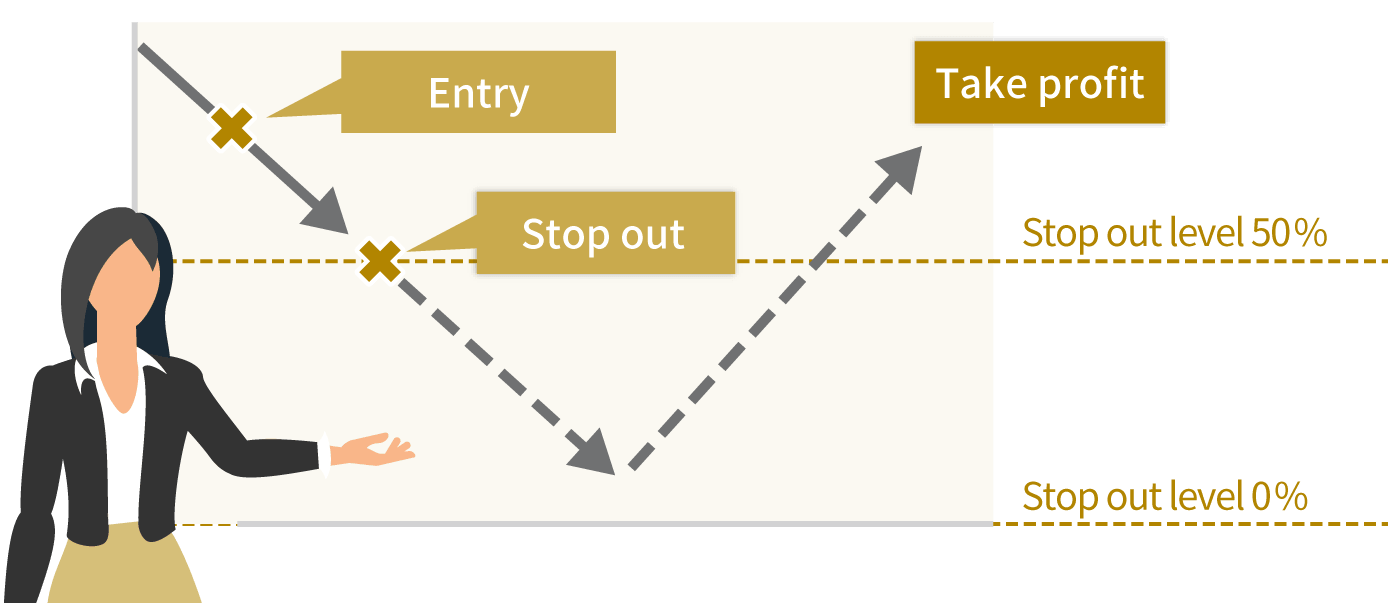
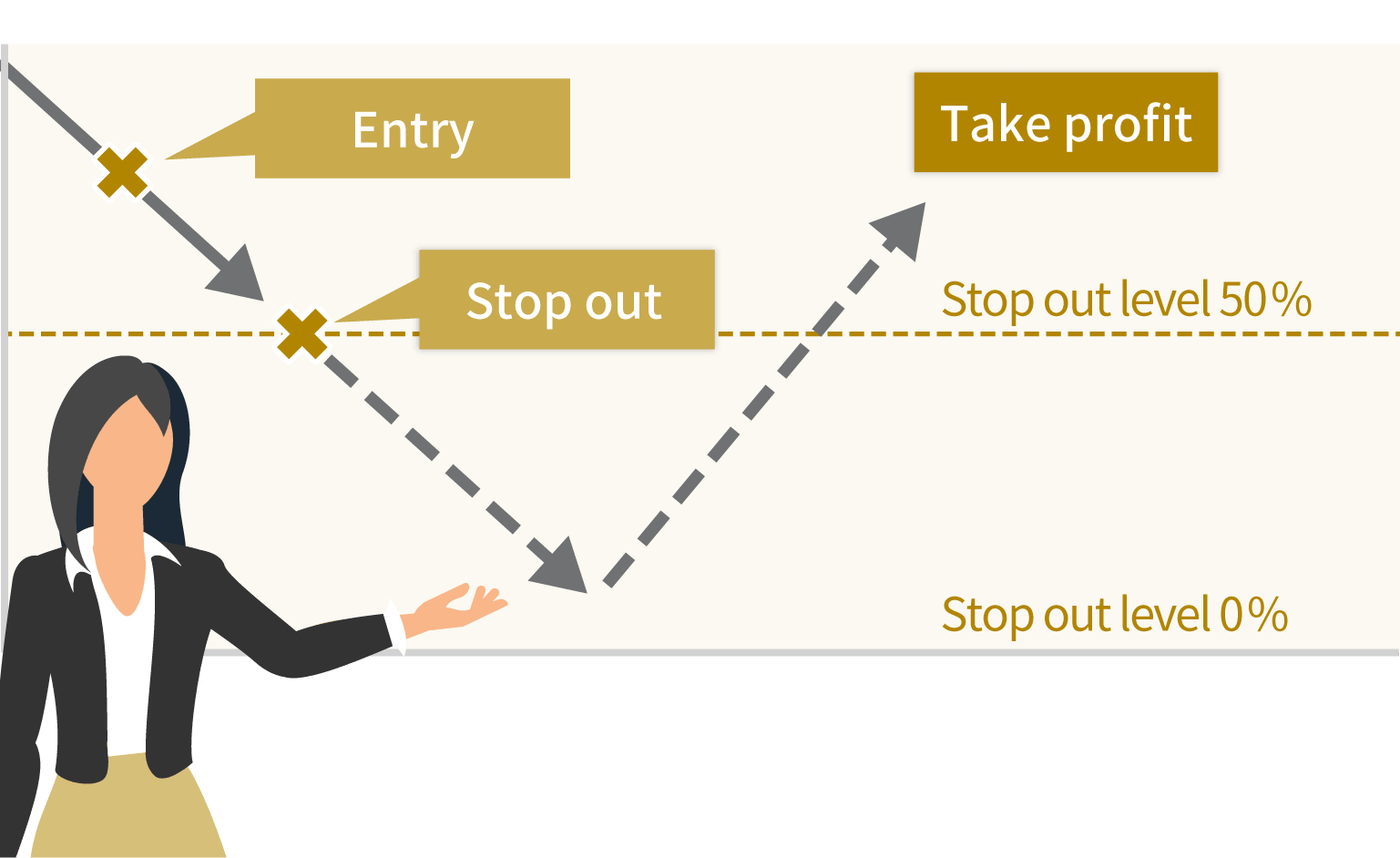
Exness does not trigger a stop-out until the margin maintenance ratio reaches 0%.A stop-out is a system that forcibly closes open positions when the margin maintenance ratio reaches a certain level in order to prevent losses from escalating. While a higher stop-out level can help minimize losses, it also increases the risk of a stop-out being triggered by temporary market fluctuations, thereby reducing opportunities to lock in profits.
In particular, when aiming for large profits through high-leverage scalping trades, stop-loss orders can hinder your trading strategy. However, with Exness, you can continue trading until your margin maintenance level reaches 0%, enabling highly efficient scalping trades.
Please note that Exness employs a “zero-cut” system, whereby if a sudden market fluctuation prevents a stop-out from being executed in time and results in a negative account balance, Exness will reset the account balance to zero. Since there is no risk of margin calls (requests for additional margin), you can confidently engage in scalping trades using high leverage.
The order execution method used is the NDD method.
Exness uses the NDD (No Dealing Desk) system, which is ideal for scalping, across all account types.The NDD model is a highly transparent and fair order execution method that routes orders directly to the interbank market without the involvement of a dealer. Unlike the DD model, which uses a dealer as an intermediary, the NDD model offers faster execution speeds, allowing you to maximize your performance in scalping trades.Furthermore, the NDD model is divided into two types: “Market Execution” and “Instant Execution.” For scalping trades, “Instant Execution” is more suitable as it is less prone to slippage.
Features of Exness Order Execution Methods
| Account Type | Order Execution Methods | Features |
| Standard/Cent Account | Market Execution | Slippage occurs without a requote |
| Low-Spread Account | ||
| Zero Account | ||
| Pro Account (*1) | Instant Execution | No slippage occurs that would result in a requote |
| Market Execution (*2) | Slippage occurs without a requote |
| Standard/Cent Account, Low-Spread Account/Zero Account |
|
| Order Execution Methods | Market Execution |
| Pro Account (*1) | |
| Order Execution Methods | Instant Execution |
| Market Execution (*2) |
|
| Market Execution |
Slippage occurs without a requote |
| Instant Execution |
| No slippage occurs that would result in a requote |
- Cryptocurrency CFDs are executed on a market order basis only.
- Please note that, depending on the circumstances, you may not be able to select an order execution method. If you cannot select an execution type, your order will be executed immediately.
At Exness, Instant Execution is available only on Pro accounts. In scalping trades that target just a few pips, slippage is something to be avoided. Therefore, if you focus solely on the order execution method, the “Pro Account” is the only account best suited for scalping.However, since Exness offers five account types with different trading conditions—such as spreads and transaction fees—please make a comprehensive assessment to select the scalping account that best suits your needs.

Slippage refers to a situation where the exchange rate fluctuates during the brief interval between when a trader places an order and when it is executed, resulting in the order being filled at a rate different from the one specified. A requote occurs when, due to a time lag, the exchange rate changes and the order is not filled, so a new price is quoted instead.In scalping trades, where the goal is to capture profits of just a few pips, even a slight rate deviation can reduce profits or result in a loss; therefore, Instant Execution—which eliminates slippage—is ideal. However, depending on the direction of the slippage, there are also cases where profits can increase.
Scalping using EA (automated trading) is also possible
With Exness, you can engage in scalping trades not only through discretionary trading but also using EAs (automated trading).An EA is a system that automatically executes trades based on built-in logic. Since EAs continuously monitor charts 24 hours a day, 365 days a year, even beginners who don’t have time to watch the charts or haven’t yet established a trading strategy can engage in scalping.While many brokers prohibit scalping with EAs or impose strict rules, Exness allows you to use EAs without any restrictions on trading methods, so you can enjoy scalping without missing out on profit opportunities.
Recommended Account Types for Scalping with Exness
To enjoy a smooth scalping trading experience with Exness, the key is to choose an account type that suits your trading style.
I'd like to try scalping with a small amount of money
For those who want to try scalping with a small amount of capital, we recommend Exness’s Standard or Standard Cent accounts.While professional-type accounts, which feature low spreads, require an initial deposit of at least 1,000 USD (or equivalent), Standard and Cent accounts allow you to start trading with as little as 150 USD (or equivalent).
While the spreads may seem high compared to the three Professional-type accounts, they are still below industry standards, allowing you to experience dynamic scalping trades with leverage of up to 2,000x(*).
(*) Leveraged trading involves high risk, and you may lose all of your invested capital. Please ensure you fully understand the risks before trading.
I want to do scalping trades with the lowest spreads
For those who want to engage in scalping trades with the lowest spreads, we recommend Exness’s Low Spread or Zero accounts.Both account types offer the lowest spreads among Exness’s five account types, and for major currency pairs such as USD/JPY (U.S. Dollar/Japanese Yen) and EUR/USD (Euro/U.S. Dollar), both account types feature an average spread of “zero.”For other instruments, you can trade with lower spreads using the Zero Account than with the Low Spread Account.
However, please note that since Low Spread and Zero accounts incur separate transaction fees under different structures, even if the Zero account has a lower spread, the Low Spread account may actually have a lower effective spread when transaction fees are factored in.
I want to do scalping trades with the lowest possible transaction costs
If you want to engage in scalping while keeping your total trading costs—which include the spread and any external transaction fees—as low as possible, we recommend one of the Professional-type accounts: Low Spread, Zero, or Pro.The three Professional-type accounts offer spreads and transaction fees that are lower than the industry average. These three account types feature different fee structures—fixed fees, variable fees, and no fees—and the account that offers the lowest transaction cost varies depending on the instrument.
Exness: Comparison of Trading Costs for Major Currency Pairs
| Stock | Account Type | Average Spread + Trading Commission | Transaction Costs |
| EUR/USD (Euro/U.S. Dollar) |
Low-Spread Account | 0.0 pips + 7 USD | 896 yen |
| Zero Account | 0.0 pips + 7 USD | 896 yen | |
| Pro Account | 0.6 pips + None | 768 yen | |
| GBP/USD (Pound/U.S. Dollar) |
Low-Spread Account | 0.1 pips + 7 USD | 1,024 yen |
| Zero Account | 0.0 pips + 9 USD | 1,152 yen | |
| Pro Account | 0.7 pips + None | 896 yen | |
| USD/JPY (U.S. Dollar/Japanese Yen) |
Low-Spread Account | 0.0 pips + 7 USD | 896 yen |
| Zero Account | 0.0 pips + 7 USD | 896 yen | |
| Pro Account | 0.7 pips + None | 700 yen |
Comparison of Trading Costs by Account Type for Major Currency Pairs on Exness Low-Spread Accounts
| EUR/USD | |
| Average Spread + Trading Commission |
0.0 pips + 7 USD |
| Transaction Costs | 896 yen |
| GBP/USD | |
| Average Spread + Trading Commission |
0.1 pips + 7 USD |
| Transaction Costs | 1,024 yen |
| USD/JPY | |
| Average Spread + Trading Commission | 0.0 pips + 7 USD |
| Transaction Costs | 896 yen |
Comparison of Trading Costs by Account Type for Major Currency Pairs on the Exness Zero Account
| EUR/USD | |
| Average Spread + Trading Commission |
0.0 pips + 7 USD |
| Transaction Costs | 896 yen |
| GBP/USD | |
| Zero Account | |
| Average Spread + Trading Commission |
0.0 pips + 9 USD |
| Transaction Costs | 1,152 yen |
| USD/JPY | |
| Average Spread + Trading Commission |
0.0 pips + 7 USD |
| Transaction Costs | 896 yen |
Comparison of Trading Costs for Major Currency Pairs by Account Type on Exness Pro Accounts
| EUR/USD | |
| Average Spread + Trading Commission |
0.6 pips + None |
| Transaction Costs | 768 yen |
| GBP/USD | |
| Average Spread + Trading Commission |
0.7 pips + None |
| Transaction Costs | 896 yen |
| USD/JPY | |
| Average Spread + Trading Commission |
0.7 pips + None |
| Transaction Costs | 700 yen |
(*) Transaction costs fluctuate based on daily exchange rates, so please check the latest figures before trading.
If you want to keep your trading costs low, you’ll need to compare the “trading costs”—which include the spread and trading commissions for the securities you wish to trade.
Best Trading Times and Instruments for Scalping on Exness
To efficiently accumulate profits through scalping, the key is to trade during time periods and with instruments that offer stable, low spreads and active price movement.At Exness, you can trade all instruments nearly 24 hours a day from Monday through Friday (cryptocurrency CFDs are available 24 hours a day, 365 days a year), but there are specific times and instruments that are particularly well-suited for scalping.Please check the optimal trading hours and instruments for scalping, and enjoy trading in an environment that offers plenty of opportunities to make a profit.
Best Trading Times for Scalping
In scalping trades—where the entire process from order placement to settlement takes only a few seconds at the fastest and no more than about 10 minutes at the longest—a stable environment with low spreads and price movements large enough to exceed the spread width are essential. The time periods when spreads are less likely to widen and volatility (price fluctuation) is high are as follows.
Times of High Trading Volume (Japan Time)
| Trading Hours | Features |
| 8:30 a.m.–11:00 a.m. | During the period from before the Tokyo market opens until the mid-market rate is set, price movements become more active in currency pairs involving the Japanese yen. |
| 3:00 PM–7:00 PM | Price movements gradually pick up before the London market opens. From 5:00 p.m. onward, after the London market opens, trading volume increases further, and volatility rises even more when key European economic indicators are released or key figures make statements. |
| 9:00 p.m.–2:00 a.m. | Price movements become active even before the New York market opens. This is a time when key U.S. economic indicators are released and statements by key figures are made, making it easier for trends to emerge. Volatility is particularly high until 26:00, when market participants in London and New York overlap. |
| 8:30 a.m.–11:00 a.m. |
During the period from before the Tokyo market opens until the mid-market rate is set, price movements become more active in currency pairs involving the Japanese yen. |
| 3:00 PM–7:00 PM |
Price movements gradually pick up before the London market opens. From 5:00 p.m. onward, after the London market opens, trading volume increases further, and volatility rises even more if key European economic indicators are released or key figures make statements. |
| 9:00 p.m.–2:00 a.m. |
Price movements become active even before the New York market opens. This is a time when key U.S. economic indicators are released and statements by key figures are made, making it easier for trends to emerge. Volatility is particularly high until 26:00, when market participants in London and New York overlap. |
Trading Instruments Best Suited for Scalping
To efficiently accumulate profits through scalping, it is essential to trade instruments with low spreads and high price volatility. If spreads are wide or price movements are minimal, it takes longer to recover from unrealized losses, making it difficult to target profits in a short period of time.At Exness, you can trade FX currency pairs, as well as precious metals, energy, stocks, stock indices, and cryptocurrencies via CFDs. Among these, the following instruments are particularly well-suited for scalping:
Trading Instruments Best Suited for Scalping
| Traded Securities | Features |
| USD/JPY (U.S. Dollar/Japanese Yen) |
This currency pair has high trading volume and is easy to scalp during any trading session—whether it’s Tokyo, European, or New York hours. |
| EUR/USD (Euro/U.S. Dollar) |
These currency pairs are particularly well-suited for scalping between 16:00 and 26:00 Japan Standard Time. They have high trading volume and are traded most actively during European market hours. |
| GBP/USD (Pound/U.S. Dollar) |
Trading is active from the London session through the first half of the New York session, and this market is characterized by rapid price movements and a tendency for sudden market reversals. |
| EUR/JPY (Euro/Japanese Yen) |
This is the currency pair that sees the most price volatility during European trading hours. Trends tend to develop easily, and spreads are relatively stable. |
| GBP/JPY (Pound/Japanese Yen) |
It is the most actively traded currency pair on the London market. Rates often fluctuate significantly right after the market opens, and if you can capitalize on these market movements, you can efficiently accumulate profits through scalping. |
| USD/JPY |
This currency pair has high trading volume and is easy to scalp during any trading session—whether it’s Tokyo, European, or New York hours. |
| EUR/USD |
These currency pairs are particularly well-suited for scalping between 16:00 and 26:00 Japan Standard Time. They have high trading volume and are traded most actively during European market hours. |
| GBP/USD |
Trading is active from the London session through the first half of the New York session, and this market is characterized by rapid price movements and a tendency for sudden market reversals. |
| EUR/JPY |
This is the currency pair that sees the most price volatility during European trading hours. Trends tend to develop easily, and spreads are relatively stable. |
| EUR/JPY |
This is the currency pair that sees the most price volatility during European trading hours. Trends tend to develop easily, and spreads are relatively stable. |
| GBP/JPY |
It is the most actively traded currency pair on the London market. Rates often fluctuate significantly right after the market opens, and if you can capitalize on these market movements, you can efficiently accumulate profits through scalping. |
Points to Note When Scalping with Exness
At Exness, you can enjoy scalping trading without any restrictions, but please note the following points.
Leverage Limits
At Exness, you can use leverage of up to 2,000x immediately after opening a live account; however, please note that leverage is subject to restrictions based on your account balance, the instruments you trade, and the time of day.
Restrictions Based on Account Balance
At Exness, to ensure that our clients can trade safely, the maximum available leverage is reduced as the available margin balance in your trading account increases. Please check your available margin balance and the applicable leverage before starting scalping trades.
Leverage Limits Based on Exness Account Balance
| Available Margin Balance (USD) |
Maximum Leverage |
| 0–29,999 | 2,000 times |
| 30,000–99,999 | 1,000 times |
| 100,000 or more | 500 times |
Restrictions by Traded Security
At Exness, leverage is fixed for “exotic currencies,” “energy CFDs,” “stock CFDs,” “stock index CFDs,” “cryptocurrency CFDs,” and “certain precious metals (palladium and platinum).”Regardless of your trading account’s leverage setting, the leverage specified for each instrument will apply. If you wish to trade instruments other than major and minor FX currency pairs, or CFDs on precious metals (excluding gold and silver), please check the leverage before starting scalping trades.
Leverage Limits for Each Security
| Products | Leverage |
| Exotic Currency Pairs (FX) |
200 times |
| Palladium and Platinum (Precious Metals CFDs) |
100 times |
| Energy CFDs | 200 times |
| Stock Index CFDs | 200 times |
| Stock CFDs | 20 times |
| Bitcoin (Cryptocurrency CFD) |
400 times |
| Ethereum and Litecoin (Cryptocurrency CFDs) |
200 times |
| Other (Cryptocurrency CFDs) |
20 times |
Restrictions Based on Trading Hours
At Exness, we limit the maximum leverage to 200x during times when the market is likely to experience sharp fluctuations. This applies from 15 minutes before to 90 seconds after events such as the release of key economic indicators or statements by key figures, as well as 3 hours before the FX market closes(4:00 a.m. Japan Time on Saturday) until 2 hours after the market opens (8:00 a.m. Japan Time on Monday), please note that the available leverage will be reduced to 200x, regardless of your trading account’s leverage settings.
In addition, leverage restrictions may apply on Japanese public holidays depending on market conditions. If leverage is reduced, we will notify you via the email address registered in your Exness Personal Area or through the MT4/MT5 inbox, so please check these before you begin trading.
Times When Spreads Tend to Widen
Exness consistently offers low spreads, but please note that spreads tend to widen when market liquidity is low.Spreads tend to widen significantly during periods of low liquidity—such as global holidays like Christmas and the New Year’s holiday season, when there are few market participants and trading is sluggish, or during the early morning hours in Japan when the Oceania markets open.Additionally, you should be aware that spreads may widen when unexpected news events occur that affect the economies of various countries, or when geopolitical risks—such as terrorism or conflict—are on the rise.
Times When Spreads Tend to Widen
Exness Scalping FAQs
-
Is scalping allowed with leverage of up to 1:2000 at Exness?
Yes, at Exness, you can engage in scalping trades with leverage of up to 1:2000 on all account types. However, please note that the maximum available leverage will be automatically reduced as your account balance increases.
Read More
04.08.2022
-
Is scalping with EAs possible on Exness?
Yes, at Exness, scalping using EAs (automated trading) is available for all account types. By using an EA, even beginners or those who are short on time can engage in scalping without missing out on profit opportunities.
Read More
04.08.2022
-
Please tell me which trading instruments are recommended for scalping on Exness.
At Exness, FX currency pairs with low spreads and high volatility are recommended for scalping. In particular, major currency pairs such as USD/JPY and EUR/USD have high trading volumes and are less prone to widening spreads, allowing you to scalp with stable spreads.
Read More
04.08.2022
-
Please tell me which account type Exness recommends for scalping.
At Exness, scalping is available on all account types. If you want to scalp while keeping trading costs as low as possible, we recommend choosing one of the Low Spread, Zero, or Pro account types, which offer spreads and trading commissions below the industry average.
Read More
04.08.2022
-
Does Exness prohibit scalping?
No, Exness does not prohibit scalping. You can engage in highly capital-efficient scalping trades by taking advantage of low spreads starting at 0 pips and leverage of up to 1:2000.
Read More
04.08.2022