














Exness Hedging
Transaction
Exness Hedging
Exness officially permits hedging. Hedging—holding both long and short positions in the same instrument simultaneously—is a trading strategy that can be utilized in various situations, such as to hedge against price fluctuations or to pursue greater profit opportunities.Many FX brokers prohibit hedging across multiple accounts—including accounts with other brokers—as well as arbitrage trading that utilizes hedging. However, Exness imposes absolutely no detailed rules or restrictions on hedging, so you are free to enjoy trading using hedging strategies as you see fit.
Exness Officially Allows Hedging
Exness officially permits hedging, so you can enjoy a variety of trading strategies that utilize this approach. Hedging is an effective trading method for limiting losses caused by sudden market fluctuations while aiming to profit from exchange rate gains and swap points.However, depending on the method and timing, hedging can potentially result in significant losses for both the trader and the FX broker; as a result, most brokers either prohibit hedging or have detailed rules and prohibited practices in place. If you engage in trading that constitutes a prohibited activity, your account may be frozen or suspended, so it is essential to thoroughly review the terms and conditions regarding hedging.
Please note that Exness does not impose any specific rules or restrictions on hedging. You can experience dynamic trading using Exness’s high leverage of up to 2,000x (*), while avoiding increased losses due to price fluctuations through hedging.
(*) Leveraged trading involves high risk, and you may lose all of your invested capital. Please ensure you fully understand the risks before trading.
What Is a Hedged Trade?
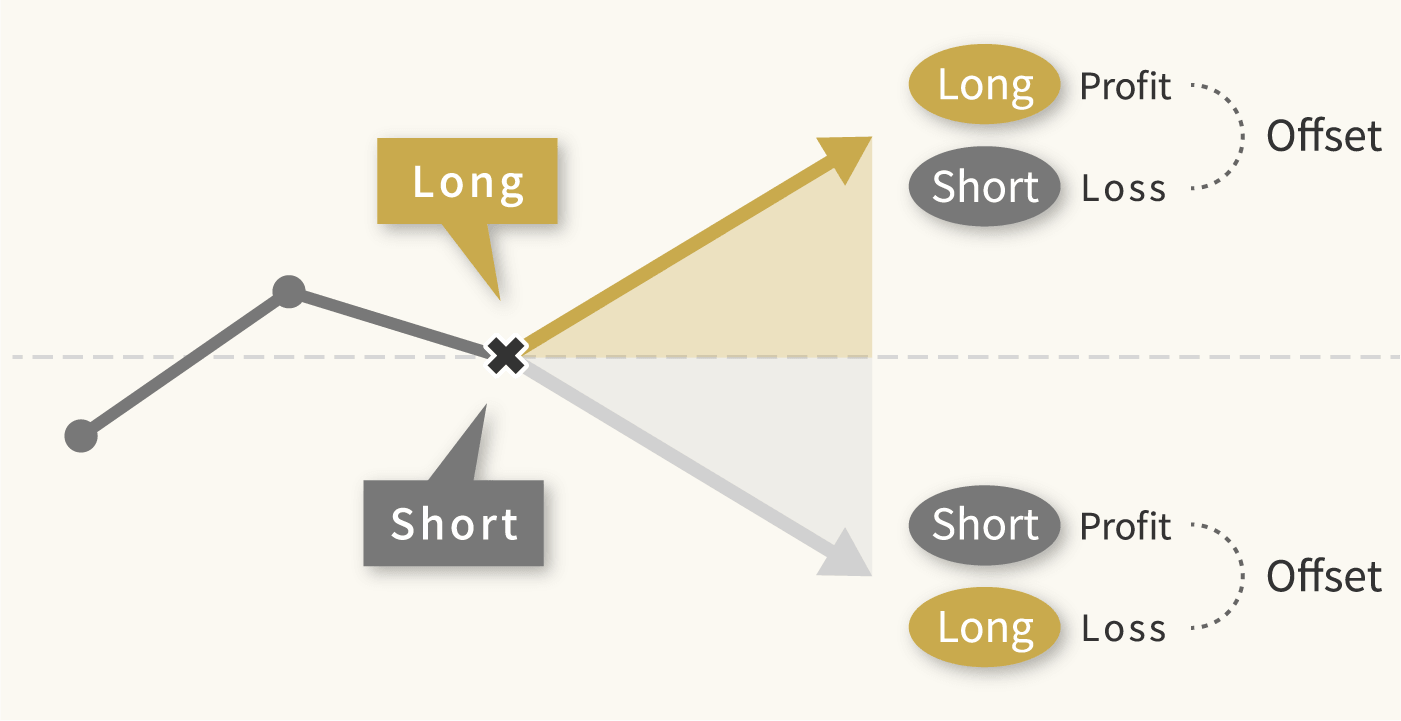
A hedged trade is a trading strategy in which you simultaneously hold both a “long” and a “short” position in the same currency pair. Since hedged trades result in unrealized losses and gains offsetting each other, they may seem ineffective at first glance.However, if you can establish and close out hedged positions at the right moments, it is possible to pursue profits while avoiding the escalation of losses caused by sudden exchange rate fluctuations.
Pros and Cons of Hedging with Exness
You’ll find many benefits to hedging trades in Exness’s excellent trading environment, which features high leverage of up to 2,000x and a zero-cut system (*).However, there are also disadvantages, such as the potential for trading costs—including spreads and swaps—to add up. Please be sure to consider both the advantages and disadvantages before using hedging strategies safely and effectively.
(*) Leveraged trading involves high risk, and you may lose all of your invested capital. Please ensure you fully understand the risks before trading.
The Benefits of Hedging with Exness
With Exness’s hedging trades—which are available under excellent trading conditions regardless of your trading strategy—you can enjoy the following benefits.
Pursuing Profits Through Temporary Risk Hedging and High-Leverage Trading
With Exness, you can aim for substantial profits through high-leverage trading while temporarily hedging against price fluctuations using hedging strategies. Exness offers industry-leading leverage of up to 2,000x, allowing you to engage in more dynamic trading.While high-leverage trading offers the potential for substantial profits, it can also result in significant losses if the market moves in an unexpected direction; therefore, hedging—which helps prevent losses from widening due to price fluctuations—is an effective strategy.
For example, if you expect the USD/JPY (U.S. dollar/Japanese yen) to rise, you open a “long” position and, as a risk hedge, open a “short” position of the same size.If the price rises as expected, you close the “sell” position and seek to profit from the “buy” position. If, on the other hand, the price falls contrary to your expectation, you can close the “buy” position and aim to profit from the “sell” position.
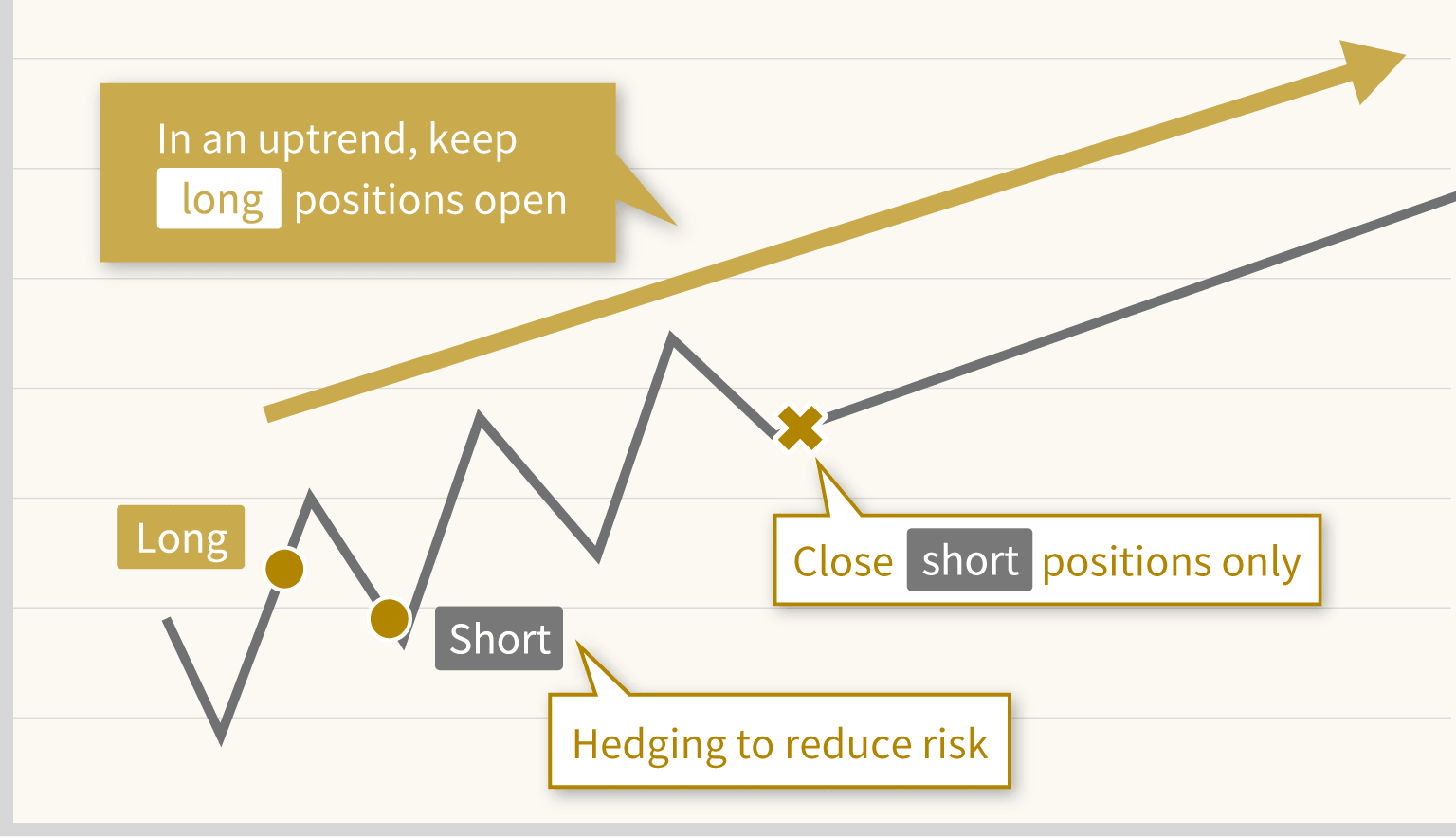
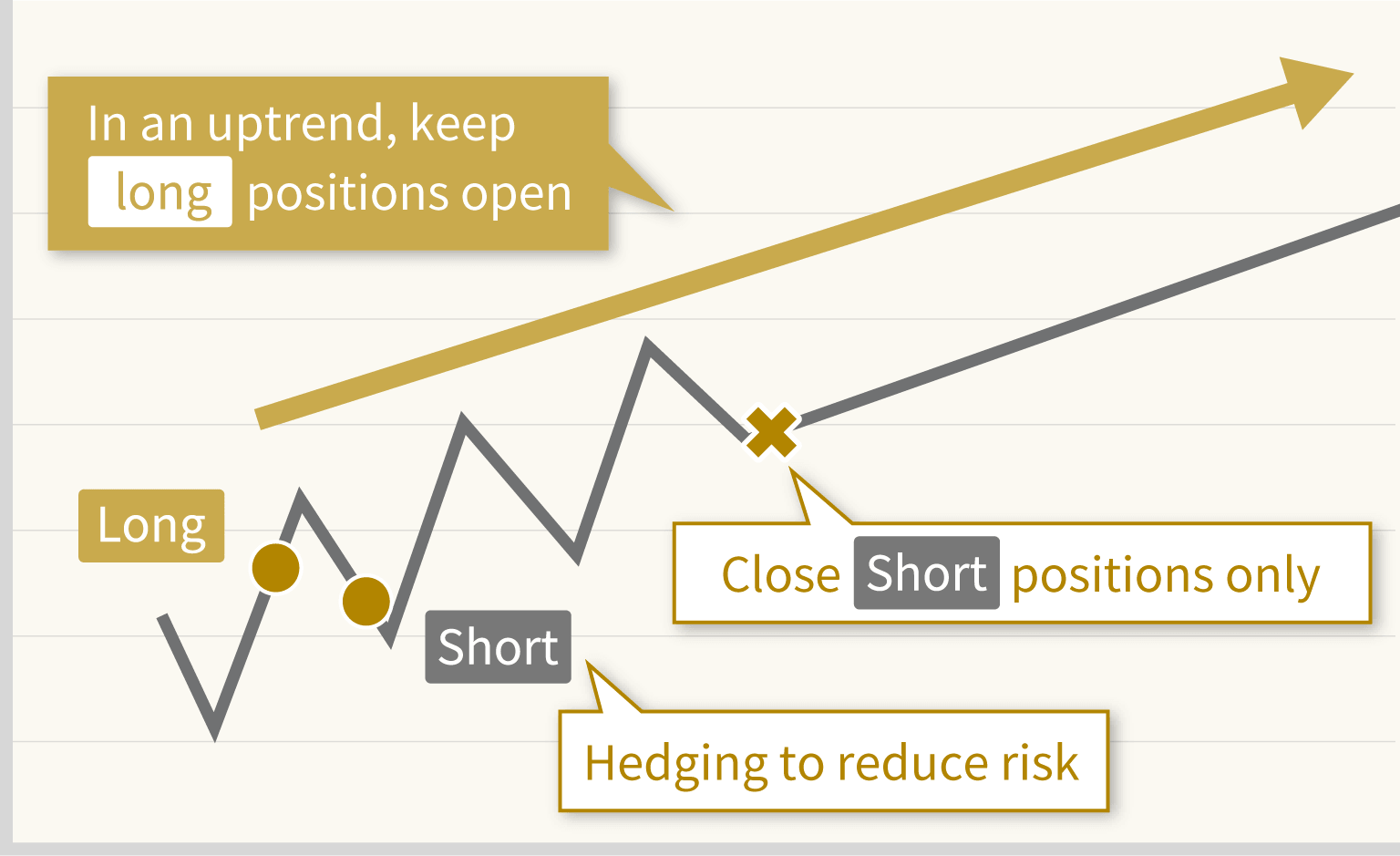
In this way, hedging allows you to pursue profits while minimizing losses, even in high-leverage trading. Since Exness employs a zero-cut system, even if losses exceed your margin, you will not be required to make a margin call (additional margin), and Exness will reset your balance to zero.While Exness’s zero-cut system provides an environment where you can focus on trading with peace of mind, you can also implement trading strategies that use hedging to avoid depleting your margin.


Swap point arbitrage is possible
With Exness, you can engage in swap point arbitrage by utilizing hedged trading. Swap point arbitrage is a trading strategy that involves accumulating the difference between the positive and negative swap points generated by long and short positions to generate profit.By holding only positions that generate positive swap points, you can steadily accumulate swap points every day. However, if the market reverses sharply and unrealized losses expand, there is a risk that both your margin and the accumulated swap points will be lost due to a margin call.By hedging against this price fluctuation risk through hedging trades, although the amount of positive swap points received will be reduced by negative swap points, you can safely accumulate swap points while avoiding a sharp decline in your margin maintenance ratio.
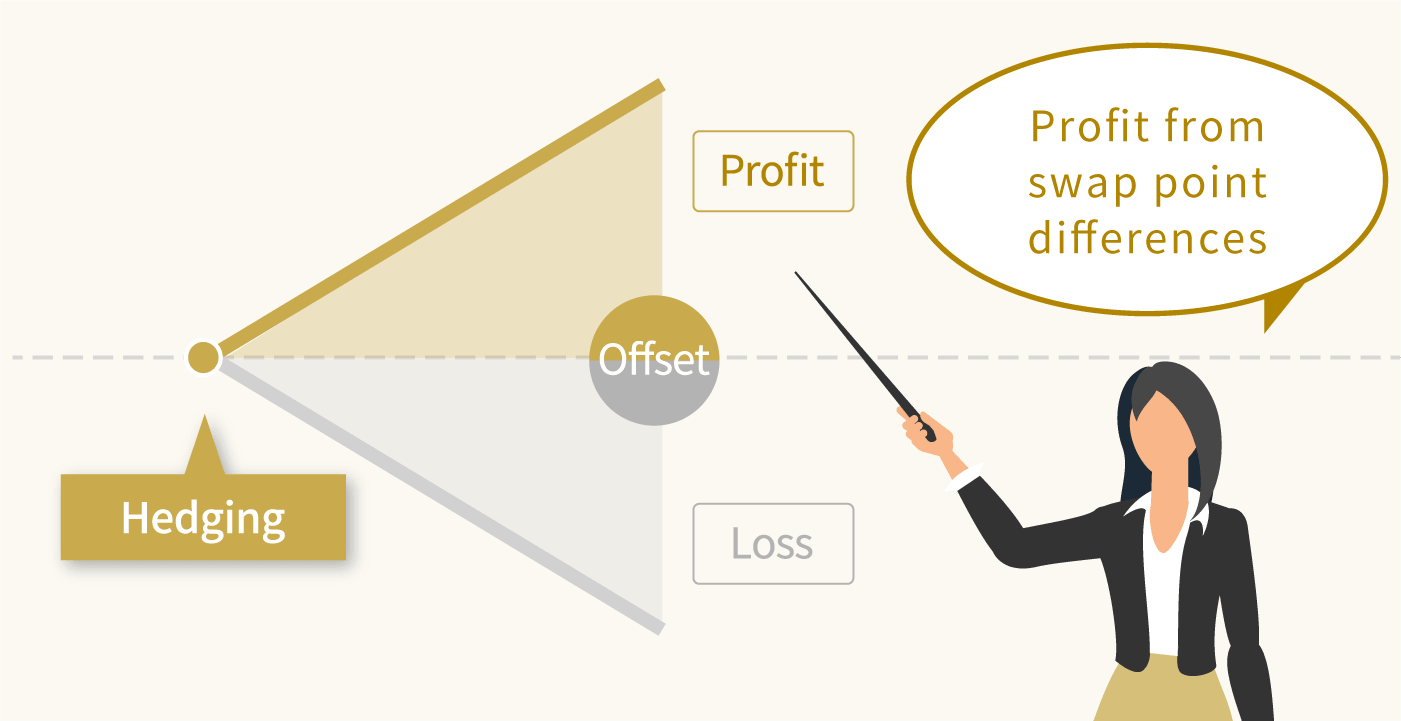
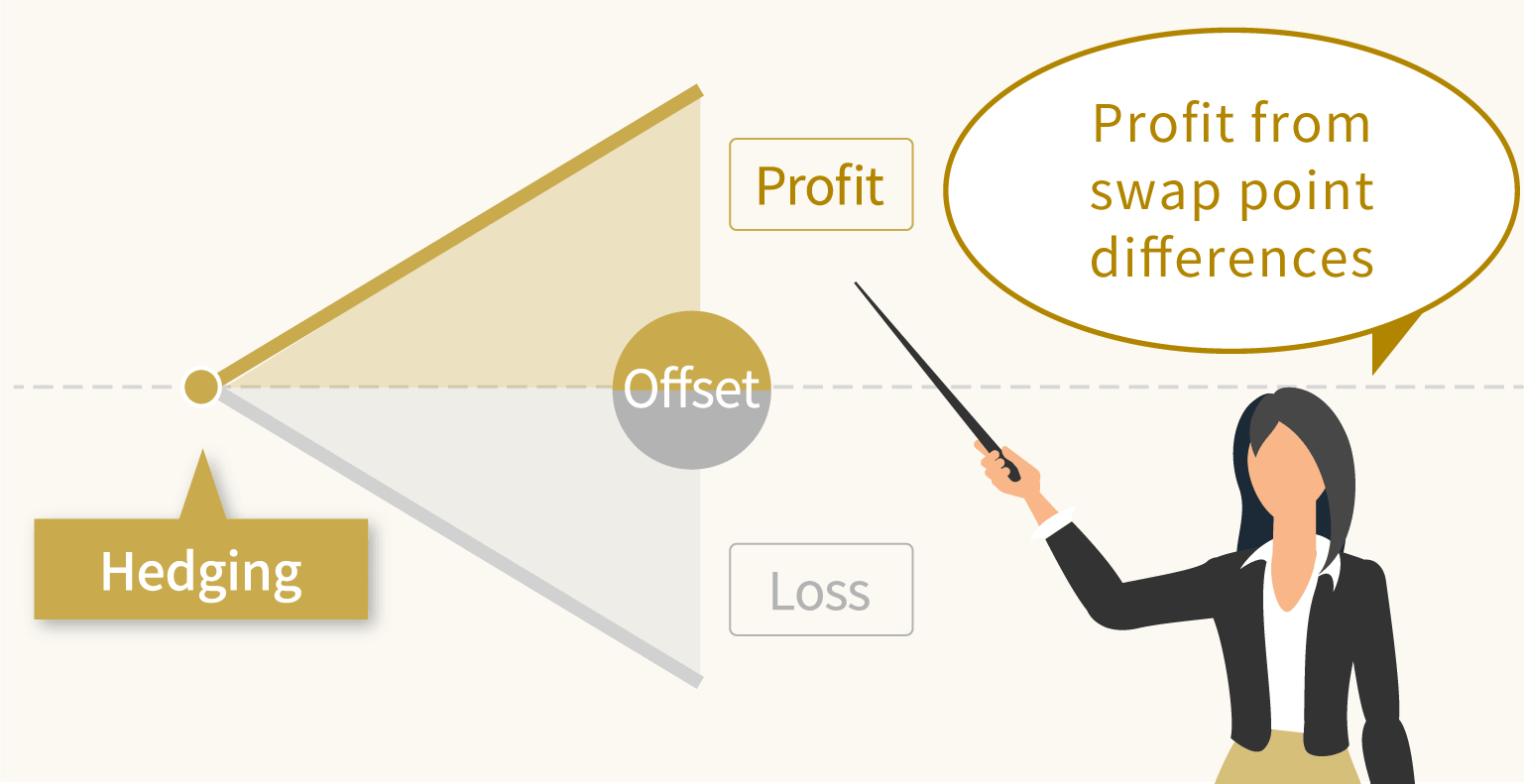
In addition, Exness allows for hedging across different brokers—a practice prohibited by other companies. You can efficiently arbitrage swap points by combining an Exness account with accounts at other brokers that offer higher positive swaps or lower negative swaps.
Please note that at Exness, you can trade certain instruments on a swap-free basis across all account types.Swap-free trading is available for a wide range of instruments, including cryptocurrencies, stock indices, major currency pairs (excluding the DXY), select minor currency pairs, gold (XAU/USD), and crude oil (USOIL). If you plan to engage in swap point arbitrage, please check the swap-free eligibility status in advance.

Swap points, also known as “interest rate differentials,” refer to the interest rate differential that arises in FX trading involving currencies from two countries with different policy interest rates. By selling a low-interest-rate currency and buying a high-interest-rate currency, you receive the interest rate differential as swap points; conversely, you pay it in the opposite scenario. Swap points accrue daily as long as you hold the position.
Allows for long-term trading without missing out on short-term trends
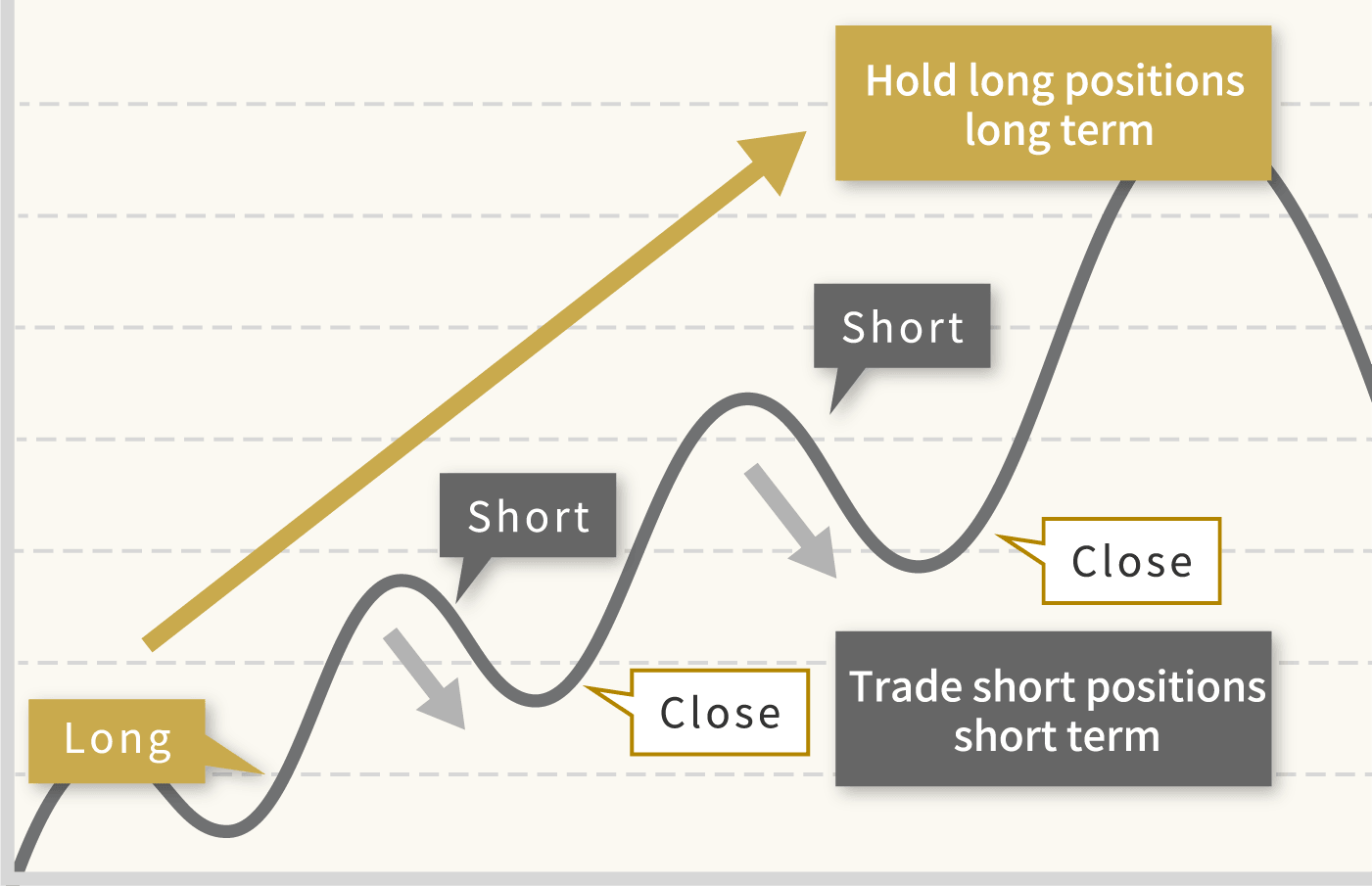
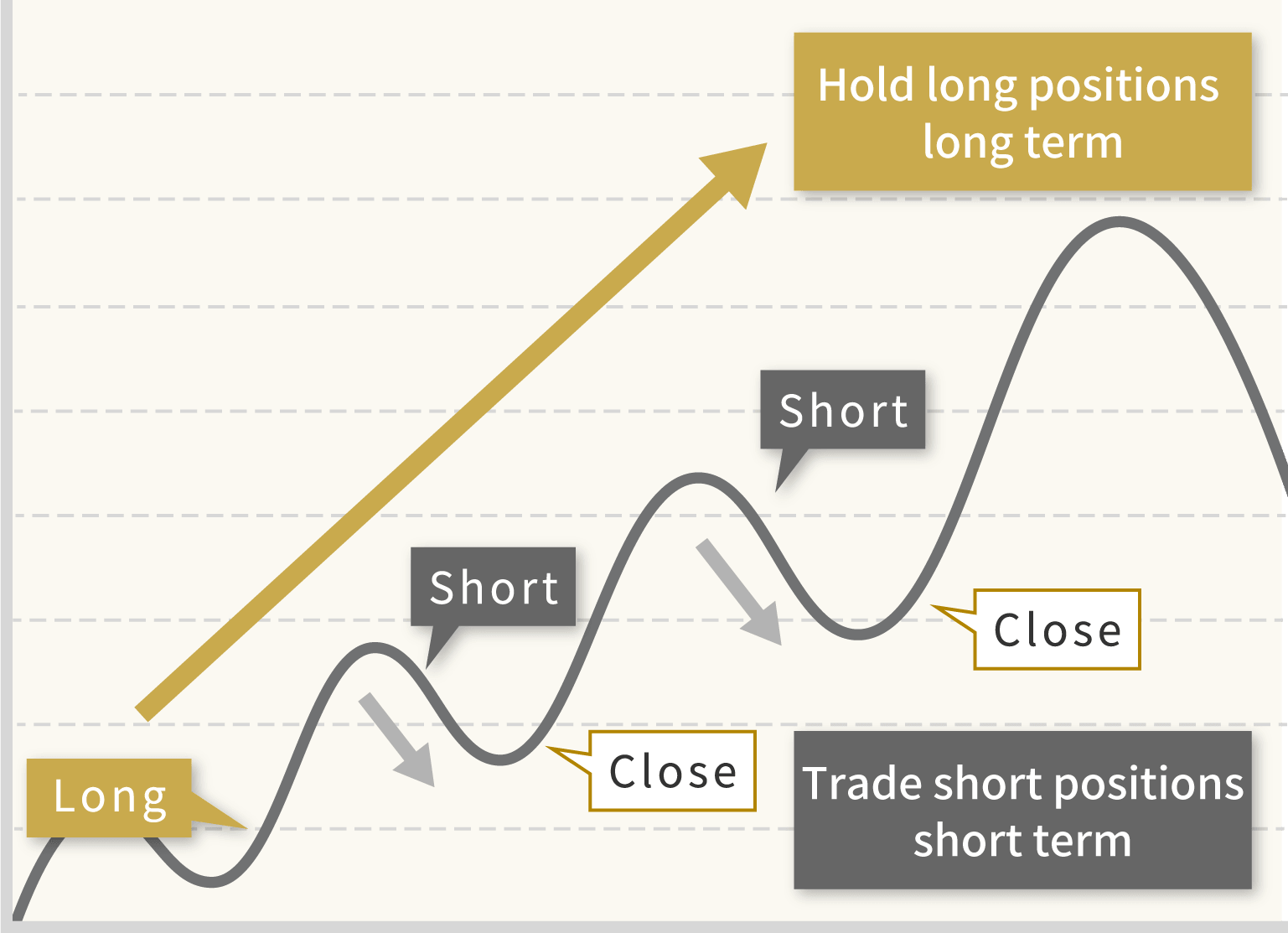
With Exness, you can aim for long-term gains from a single price direction while also capitalizing on short-term trends that move in different directions. Foreign exchange markets form long-term trends while fluctuating up and down. While waiting for prices to rise over a long period—ranging from several weeks to several months—trends in the opposite direction may occur over shorter periods, lasting from a few hours to a few days.
If you open a position opposite to your existing one to capitalize on this short-term trend, it constitutes a hedged trade; therefore, with brokers that prohibit hedged trading, you’ll have to let this opportunity pass you by.However, Exness officially permits hedging and has no specific restrictions on it, so you can pursue long-term capital gains while also generating short-term profits through scalping and day trading.
Disadvantages of Hedging with Exness
There are also some drawbacks to hedging with Exness. Please review these in advance before using hedging strategies.
Transaction costs are doubled
Since hedging involves opening both a “long” and a “short” position, it has the disadvantage of doubling trading costs. The trading costs incurred in FX trading are the “spread” and “transaction fees.”Since trading costs are incurred with every trade, hedging inevitably doubles these costs. While hedging is effective in various situations—such as to avoid an increase in unrealized losses or to maximize profits—it is important to use this strategy strategically, taking trading costs into account.While hedging does have the drawback of doubling transaction costs, Exness offers low spreads—below industry standards—across its five account types, allowing you to trade at a low cost.While external trading commissions apply only to the Low Spread and Zero accounts, both account types feature extremely tight spreads starting at 0 pips, allowing you to keep your total trading costs low. Please select a trading account that suits your trading instruments and strategy, and take advantage of hedging at the lowest possible cost.
Losses could increase
Hedging trades must be conducted with caution, as losses can escalate depending on the timing and strategy used. For example, if you enter a hedged position, decide that an uptrend has begun, and close out the opposing “sell” position with a stop-loss order, but the price then reverses and drops sharply, the unrealized loss on your “buy” position will increase.Furthermore, in hedging trades aimed at arbitraging swap points, fluctuations in swap rates could result in negative swap payments on both positions.
Hedging is an effective method for limiting losses. However, if not executed strategically, it can actually increase losses; therefore, you must thoroughly analyze the market before deciding when to place or close hedging positions.In addition, while engaging in hedging, you can mitigate the risk of increased losses by regularly checking for fluctuations in swap points and significant market changes.
If you wish to close both “buy” and “sell” positions at the same time, be sure to use the limit order feature. Closing them manually one at a time may result in a discrepancy in the closing prices, which could cause your unrealized loss to exceed your unrealized profit. Additionally, if you are holding hedged positions across accounts with different brokers, you should exercise caution because quoted prices and spreads may vary.With Exness, there is a risk that even if a limit order is executed, the price may not reach the limit on your account with another broker, leaving the position open. If the unrealized loss on the unfilled position grows significantly, your profits may be reduced or eliminated entirely.
How to Use Exness's Hedging Trading
Since Exness does not prohibit hedging, you can freely use hedging strategies in your trading without worrying about detailed rules or restrictions. Hedging across multiple accounts—which is prohibited at other brokers—is also permitted with Exness.
Hedging Transactions Within the Same Account
Hedging within the same Exness account is an effective risk management strategy when there is a high likelihood of significant market movements but the direction is unpredictable. For example, you can use hedging at times when the foreign exchange market is likely to be affected, such as during the release of key economic indicators or statements by key figures.Once a trend is confirmed, you can close the opposite position and pursue profits with the position aligned with the trend.
Hedging within the same account does not trigger a margin call because unrealized gains and losses offset each other. If you want to limit your losses without missing out on profit opportunities, we recommend hedging within the same account at Exness.
Hedging Across Multiple Accounts
Hedging across multiple accounts—including accounts with other brokers—is an effective strategy when you want to reliably generate significant profits through high-leverage trading while limiting losses to the amount of your margin. When you use high leverage to hedge across accounts, you’ll have substantial unrealized gains in one account and substantial unrealized losses in the other.Due to the high leverage, the unrealized loss may widen, potentially triggering a margin call in a short period of time; however, you can simultaneously realize a profit in the other account.
Even if a stop-out is triggered, Exness’s Zero Cut System resets any negative balance to zero, so you will not incur losses exceeding your margin. Using this hedging strategy is considered an abuse of the Zero Cut System and is prohibited by most FX brokers.If you plan to engage in hedging across accounts at Exness and other brokers, please carefully verify that this does not constitute a prohibited activity with the other broker before beginning your trades. Please note that Exness does not prohibit hedging based on the Zero Cut System; therefore, we recommend using multiple accounts within Exness for cross-account hedging.
Points to Note About Hedging Trades on Exness
When engaging in hedging trades on Exness, please keep the following points in mind.
The rules for hedging vary by broker.
Exness does not have any specific prohibitions or detailed rules regarding hedging. However, since rules vary by FX broker, if you plan to engage in hedging using an account with another broker, you must review their terms and conditions in advance.
Please be aware that if you violate the Terms of Service, you may be subject to penalties such as forfeiture of profits or account suspension.
Required margin is offset only for hedging positions within the same account.
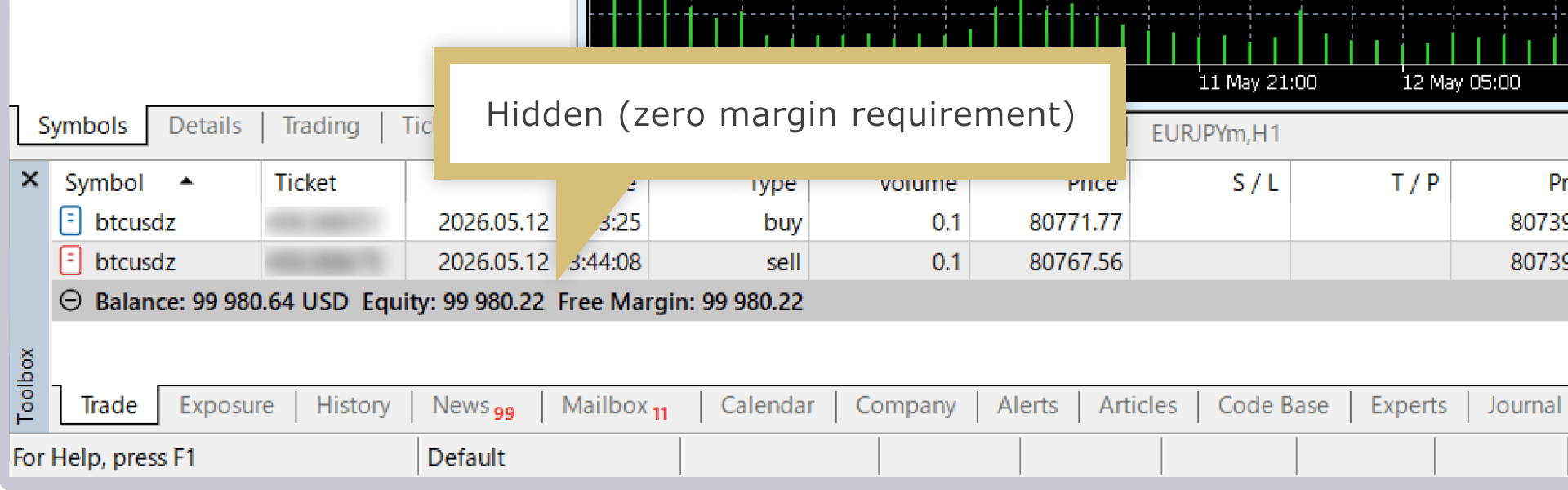
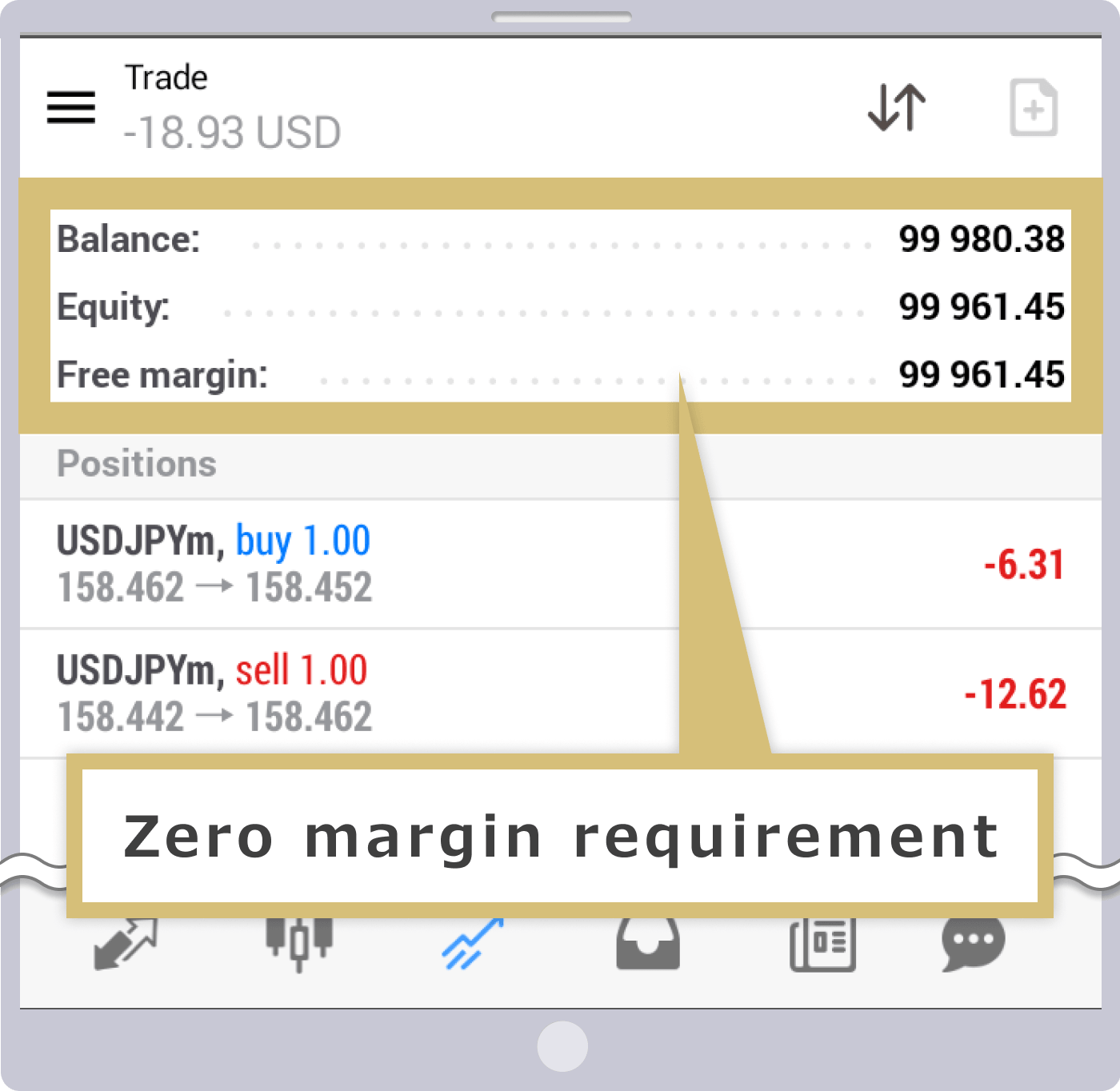
Only when you open hedging positions within the same Exness account will the required margin for “buy” and “sell” positions be offset against each other.The required margin is the amount of margin needed to execute a trade. For example, if opening a long position requires a margin of 500 yen, the margin required to open an opposite position with the same lot size within the same account will be offset by the long position, resulting in a margin of 0 yen. On MT4(MetaTrader 4)/MT5 (MetaTrader 5), the margin field itself will be hidden (on the MT4 smartphone app, it will display “Margin: 0”).
(*)MetaTrader, MetaTrader 4, MetaTrader 5, MT4, and MT5 are trademarks or registered trademarks of MetaQuotes Ltd.
If the lot sizes of hedged trades differ, only the matching lots between the buy and sell positions will be offset, and margin is required for the remaining positions.
Margin Requirements for Hedging Trades on Exness
| Buy Order Quantity | Sell Order Quantity | Required Evidence Amount |
| 1 lot | 1 lot | No Margin Required |
| 1 lot | 2 lots | 1 lot |
| 1 lot | 3 lots | 2 lots |
| 2 lots | 1 lot | 1 lot |
| 2 lots | 2 lots | No Margin Required |
| 2 lots | 3 lots | 1 lot |
| Required Evidence Amount: None | |
| Buy Order Quantity | 1 lot |
| Sell Order Quantity | 1 lot |
| Required Margin Amount: 1 lot | |
| Buy Order Quantity | 1 lot |
| Sell Order Quantity | 2 lots |
| Required Margin: 2 lots | |
| Buy Order Quantity | 1 lot |
| Sell Order Quantity | 3 lots |
| Required Margin Amount: 1 lot | |
| Buy Order Quantity | 2 lots |
| Sell Order Quantity | 1 lot |
| Required Evidence Amount: None | |
| Buy Order Quantity | 2 lots |
| Sell Order Quantity | 2 lots |
| Required Margin Amount: 1 lot | |
| Buy Order Quantity | 2 lots |
| Sell Order Quantity | 3 lots |
Please note that even if you have an Exness account, the required margin will not be offset when opening hedging positions across different accounts.
Closing a hedged position in cryptocurrency CFDs requires a minimum of 0.1 lots.
For cryptocurrency CFDs, including ETH (Ethereum) and LTC (Litecoin), when engaging in hedging trades and closing out one side of the position in full or in part, the position must be at least 0.1 lots. Please be sure to trade strategically when hedging with these instruments, taking into account the possibility of closing out the position in full or in part.
Exness: Frequently Asked Questions (FAQ) About Hedging
-
Please tell me the disadvantages of hedging with Exness.
With Exness, while hedging allows you to pursue profits while minimizing losses, there are also drawbacks: since you hold both long and short positions, trading costs double, and depending on the timing and how you use this strategy, losses may actually increase.
Read More
16.08.2022
-
Please tell me the benefits of hedging with Exness.
With Exness, you can engage in swap point arbitrage using hedging strategies and conduct hedging trades across multiple accounts, including those with other brokers. Since many FX brokers prohibit these strategies, a major advantage of Exness is that it allows you to engage in hedging trades freely, without restrictions on your trading approach.
Read More
16.08.2022
-
Please tell me about the trading costs associated with hedging trades on Exness.
At Exness, when engaging in hedging trades, you will incur trading costs in the form of spreads and transaction fees. Since you hold both long and short positions, your trading costs will double; however, by selecting the appropriate instruments and account type based on your trading strategy, you can engage in hedging trades while keeping your total trading costs low.
Read More
16.08.2022
-
Please tell me about the margin requirements for hedging trades on Exness.
At Exness, if you open a hedged position with the same lot size for both buy and sell trades within the same account, the required margin is offset and becomes 0 yen. However, please note that margin is required for hedged positions where the lot sizes differ—even within the same account—or for hedged positions held across multiple accounts.
Read More
16.08.2022
-
Does Exness have any restrictions on hedging trades?
No, Exness does not impose any restrictions on hedging. Since Exness has no specific rules or prohibitions regarding hedging, you are free to use any strategy you choose while hedging to avoid amplifying losses due to price fluctuations.
Read More
16.08.2022